
Showing top 0 results 0 results found
Showing top 0 results 0 results found
.png)



Every HR team knows the feeling: a flood of the same questions about leave balances, benefits enrollment, and company policies, all landing in the same inbox. Meanwhile, the strategic work (employee engagement, talent acquisition, culture-building) keeps getting pushed to "next week."
HR chatbots change that equation. These AI-powered virtual assistants use natural language processing to handle routine HR tasks and employee queries around the clock, giving HR professionals their time back for work that actually moves the needle.
Below, we break down what HR chatbots do, how they fit into your HR operations, and which platforms are worth your attention in 2026.
- What are HR chatbots?
- How chatbots can help in HR operations
- Key features to consider while looking for the best HR chatbot platform
- Popular HR chatbot use cases
- Top 10 chatbot platforms for HR support and operations
- Add an AI-powered chatbot to your HR stack
What are HR chatbots?
An HR chatbot is an AI-powered tool designed to handle employee support through natural language conversations. Employees ask a question in plain English (or any other supported language), and the chatbot pulls the right answer from your company policies, HR systems, or knowledge base. No tickets, no waiting.
Most HR chatbots integrate with platforms your team already uses, like Slack, Microsoft Teams, or your company website. Employees get instant access to HR information right where they work.
Behind the scenes, natural language processing and machine learning help the chatbot understand employee intent and improve its accuracy over time.
Typical use cases span the entire employee lifecycle: recruitment and initial screening, onboarding, benefits enrollment, leave management, performance tracking, and offboarding. By automating routine tasks, HR chatbots free HR departments to focus on strategic initiatives such as employee engagement, company culture, and talent development.
How chatbots can help in HR operations
AI-powered HR chatbots plug into everyday HR tasks and remove the bottlenecks that slow your team down. In recruitment, they handle initial resume screening, interview scheduling, and candidate sourcing, making the hiring process faster without sacrificing quality.
New hires get guided through document submission, policy familiarization, and initial training during onboarding, so the transition into your company feels smooth from day one. For ongoing employee support, chatbots act as an always-on HR help desk. They provide accurate answers to questions about leave policies, payroll inquiries, benefits, and company policies.
They also gather employee feedback through pulse surveys and sentiment tracking, giving HR leaders real-time data on what is and isn't working.
The operational impact is hard to ignore. Automation through chatbots can reduce contract processing time by 88% and cut HR operational costs by up to 40%. And the conversations your HR chatbot has with employees produce useful data that reveals opportunities to improve processes across the board.
HR professionals can also use chatbots to offer personalized learning paths, recommend training resources, and track progress. For exit management, chatbots conduct exit interviews and support knowledge transfer, ensuring an efficient and thorough offboarding experience.
Key features to consider while looking for the best HR chatbot platform
Picking the right HR chatbot platform comes down to how well it matches your HR team's actual needs. Here is what to look for.
Supported HR functions
The best HR chatbot platforms cover the full range of HR services: talent acquisition, onboarding, employee engagement, performance management, and self-service. Look for a platform that can handle the HR tasks you need automated today, with room to expand as your HR processes evolve.
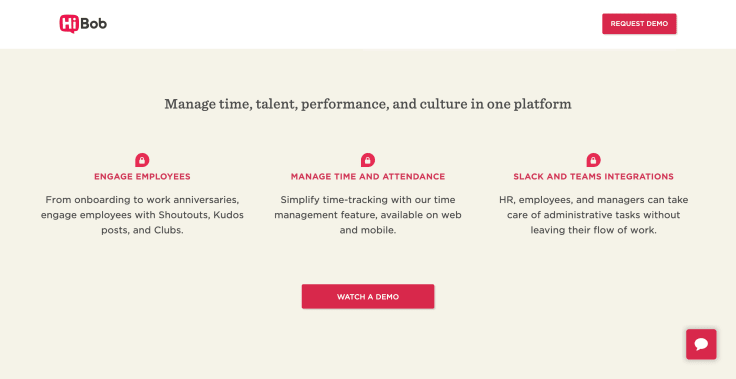
Effective HR chatbots guide new hires through required activities, support performance management, and empower employees with instant answers to HR-related concerns, all without waiting for an HR representative to become available.
Integration capabilities
An HR chatbot that can't talk to your existing systems is a chatbot that creates more work, not less. Integrating with your HRIS, ATS, LMS, and payroll platforms lets the chatbot read, write, and update employee data without manual syncing. Integration with communication platforms like Slack or Microsoft Teams means employees interact with the chatbot in the tools they already use daily.
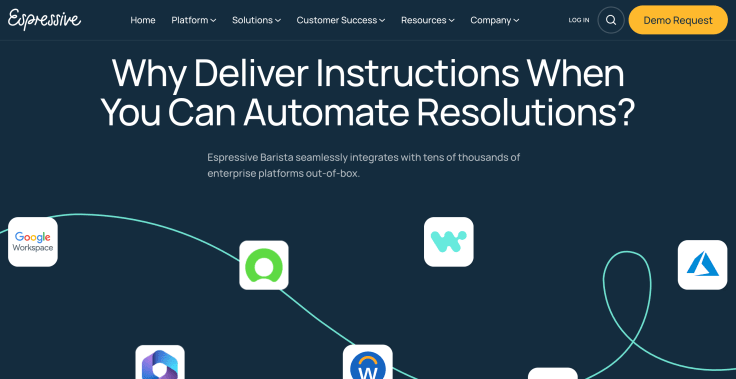
Good integration also improves reporting: the chatbot can pull real-time information from multiple systems and present it in one place, giving HR staff a complete picture without juggling dashboards.
Ease of use and customization
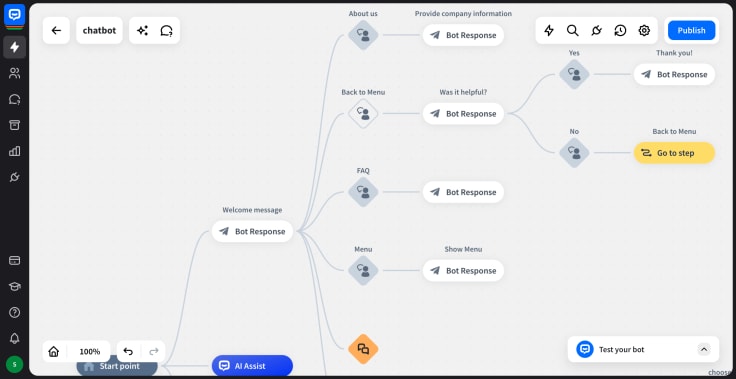
A user-friendly platform with an intuitive drag-and-drop interface lets HR professionals build and adjust conversation flows without calling developers. Platforms that offer pre-built templates for common HR functions significantly reduce setup time.
Customization matters just as much. Your HR chatbot should match your brand's tone and language, and support complex HR workflows specific to your organization. The ability to fine-tune the chatbot with company-specific policies and language is what separates a generic FAQ bot from a genuine HR tool.
Analytics and reporting
Good analytics help HR teams spot trends and pain points, like recruitment bottlenecks or topics where employees keep asking for clarification. By analyzing interaction data, HR staff can continuously optimize the chatbot and the processes behind it.
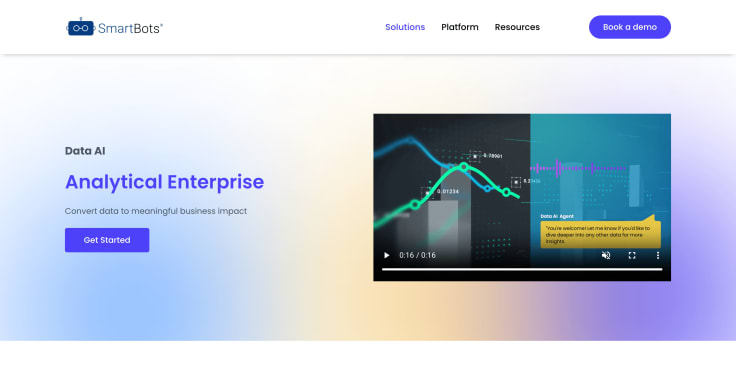
Advanced platforms also offer predictive analytics, helping HR leaders anticipate issues like high turnover or declining employee satisfaction before they become full-blown problems. Customizable dashboards and detailed reports save time and make data-driven decisions the default, not the exception.
Scalability
As your company grows, so does your HR workload. A scalable chatbot platform handles higher interaction volumes without performance dips, and lets HR departments add new workflows, integrations, or HR functions as needed.

For organizations going through rapid growth or restructuring, this is especially important. A solid platform can also support multi-language capabilities and geographical expansion, providing consistent HR support to global teams across time zones.
AI capabilities
Natural language processing is what lets an HR chatbot understand employee queries in conversational language instead of forcing people to pick from rigid menus. Advanced AI models detect intent, recognize sentiment, and learn from past interactions to deliver more context-aware responses over time.
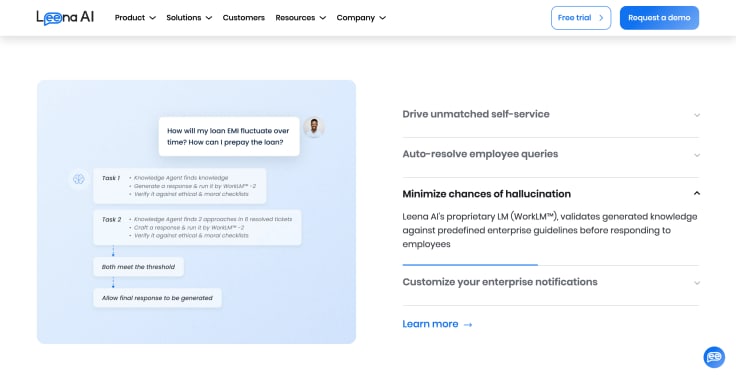
Platforms with strong NLP handle multiple languages and dialects, which matters for organizations with diverse, global teams. AI chatbots can also personalize interactions by drawing on insights from past interactions and tailoring responses to individual users.
Security and compliance
HR chatbots handle sensitive employee data, so compliance with regulations like GDPR, CCPA, and HIPAA is non-negotiable. Look for features like role-based access control, audit logs, and data anonymization. Regular security assessments and certifications show a platform takes protection seriously.
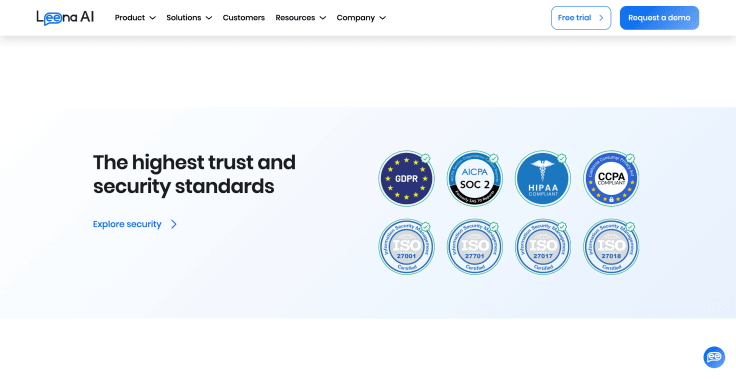
When employees trust that their conversations are confidential and legally compliant, they are more likely to use the chatbot for the queries that matter, from benefits questions to sensitive workplace concerns.
Pricing model
Pricing models vary: subscription-based (per user, per interaction, or per active chatbot), usage-based, or custom enterprise plans. Some platforms offer free trials or freemium tiers so you can test before committing.
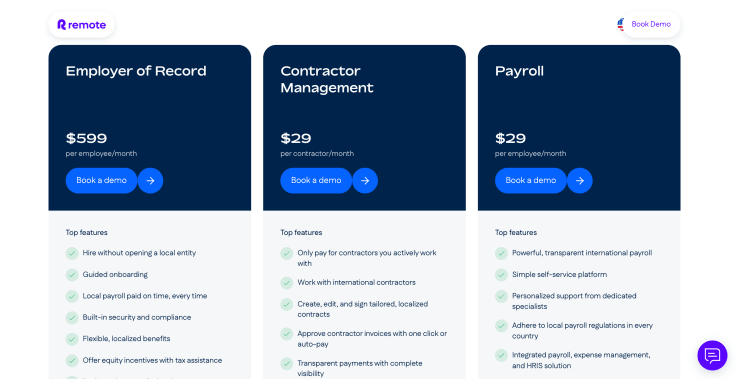
The key is to assess both short-term affordability and long-term scalability. A cheap tool that can't grow with your organization ends up costing more in the long run.
Customer support services
Responsive support is critical during setup and integration, especially for organizations with complex HR systems. Many platforms offer dedicated onboarding, training, and ongoing support to ensure HR teams get full value from the chatbot. Regular updates, proactive maintenance, and feature improvements keep the platform reliable as your HR needs evolve.
Popular HR chatbot use cases
HR chatbots can take on a wide range of HR tasks across the employee lifecycle. Here are the use cases that deliver the most impact.
Chatbots in the recruitment process
AI-powered HR chatbots handle the repetitive parts of recruitment, so your team can focus on building relationships with top talent. They list job openings, screen resumes, shortlist candidates, and manage interview scheduling, cutting the back-and-forth that slows down the hiring process.
The result: a shorter time to hire and a better candidate experience.
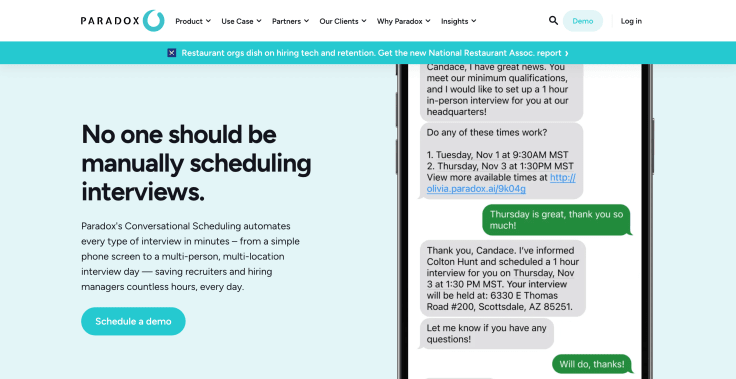
Chatbots also answer candidate queries instantly, provide consistent communication, and help reduce ticket volume for your HR team. With built-in data analytics, recruiters can identify trends, measure efficiency, and continuously optimize their recruitment process.
Chatbots in onboarding and offboarding
During onboarding, HR chatbots guide new hires through paperwork, document submissions, compliance training, and introductions to company culture and benefits. New employees get immediate support instead of waiting for an orientation session, and HR teams save time on repetitive walkthroughs.
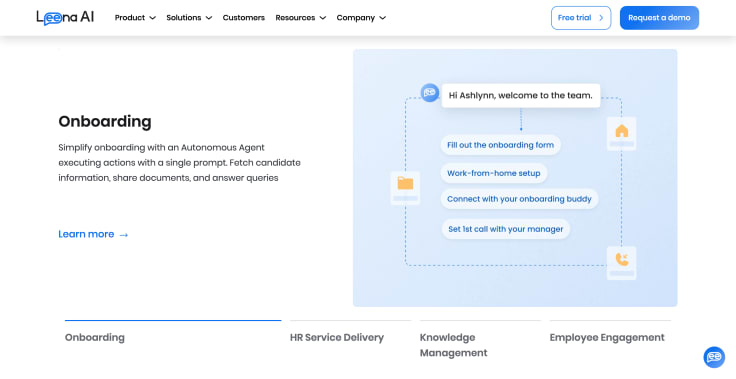
On the offboarding side, chatbots collect feedback from departing employees, guide knowledge transfer, and automate admin tasks such as revoking system access and generating final paperwork.
loanDepot, for example, uses its AI assistant ElleDee for onboarding support, with 90% of new hires reporting that the assistant was helpful during orientation and engagement rates far exceeding those of traditional email communications.
Chatbots in employee engagement
HR chatbots can gather feedback through pulse surveys, track sentiment, and flag engagement issues before they escalate. They offer employees a convenient way to voice opinions or suggest improvements, and they can answer policy-related questions 24/7, reducing frustration and ensuring employees feel supported at all hours.
Personalized interactions, like acknowledging achievements or celebrating milestones, help boost employee satisfaction. HR leaders get visibility into engagement metrics to see where intervention is needed.
Chatbots in performance management
HR chatbots support performance management by facilitating feedback, goal tracking, and automated reminders that keep employees aligned with organizational objectives. They collect data on employee progress and help generate performance reports, making evaluations more objective and data-driven.
Instead of relying on annual reviews alone, chatbots enable ongoing check-ins and can recommend personalized training resources based on performance gaps. This continuous approach improves transparency and helps reduce bias in evaluations.
Chatbots as employee self-service
Self-service is where HR chatbots deliver the most immediate cost savings. Employees can check leave balances, submit requests, update personal information, and retrieve documents like payslips or tax forms through simple conversations. No tickets, no waiting.
This reduces the administrative burden on HR teams and gives employees instant access to the HR information they need. Consumer Energy uses its AI assistant, CEVA, on Microsoft Teams for exactly this, providing over 1,000 IT and HR answers per month while dramatically reducing the support workload.
Chatbots providing data-driven insights
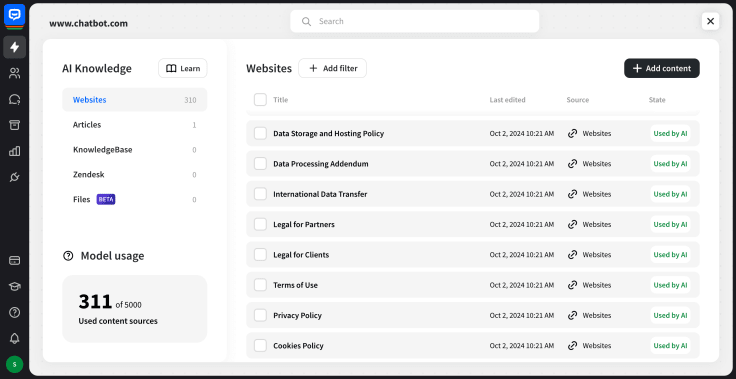
Every conversation an HR chatbot has with employees creates a data point. Over time, this builds into a rich dataset that reveals patterns in employee satisfaction, engagement, and common pain points. HR teams can capture this information from conversations, surveys, and routine queries.

By analyzing frequently asked questions, HR departments can identify knowledge gaps and improve training programs. Data can be segmented by role, location, or tenure for targeted insights. Johnson Controls, for instance, launched its AI agent Omni to support 100,000 employees worldwide, reducing HR call volume by 30-40% and freeing HR partners to focus on strategic, consulting-focused work.
Top chatbot platforms for HR support and operations
Comparison table
Below is a comparison of three key features across the top HR chatbot platforms: ease of use, analytics, and scalability. These are the factors that determine whether your HR chatbot will actually get adopted across the whole HR department.
|
Platform |
Ease of use |
Analytics & reporting |
Scalability |
|
ChatBot |
Intuitive drag-and-drop builder, no-code interface |
Detailed conversation analytics and user insights |
Highly scalable for small to large businesses |
|
Mya Systems |
AI-powered conversational interface for recruiters |
AI-powered insights on candidate experience & recruitment efficiency |
Best for large-scale recruitment |
|
Leena AI |
No-code platform with comprehensive HR tools |
HR analytics, employee sentiment analysis |
Scalable for small and large enterprises |
|
Bloomfire AI |
Easy to deploy for IT & HR support |
Performance reports, FAQ analysis, productivity metrics |
Scalable across IT and HR departments |
|
HiBob |
User-friendly interface with HR dashboard |
Engagement metrics, performance analytics |
Suitable for growing companies and enterprises |
|
Olivia |
User-friendly, recruitment automation focused |
Detailed recruitment analytics, candidate tracking |
Suitable for recruitment of all sizes |
|
TaroWorks |
Simple Salesforce integration |
Employee engagement metrics, Salesforce analytics |
Scalable for medium to large enterprises |
|
Barista |
AI-powered interface |
Usage reports, productivity metrics |
Suitable for organizations of all sizes |
|
Gupy |
User-friendly, intuitive platform |
Recruitment reports, hiring efficiency metrics |
Flexible, adaptable for enterprise use |
|
SmartBot360 |
Easy-to-build customizable workflows |
Feedback analytics, HR metrics reporting |
Suitable for small to large businesses |
ChatBot
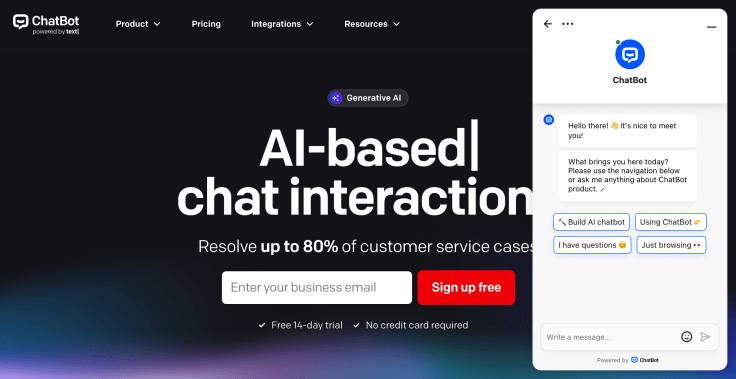
ChatBot is one of the most versatile options for automating HR services. Its no-code, drag-and-drop builder lets HR teams create custom conversation flows in minutes. No developers needed.
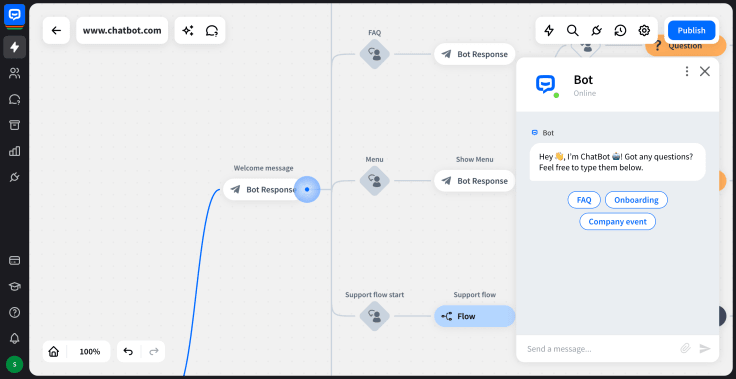
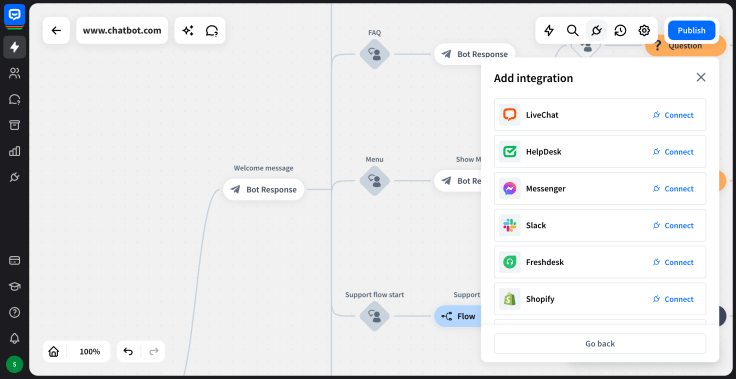
The platform covers recruitment, onboarding, employee engagement, self-service, and feedback collection. It integrates with Slack, Microsoft Teams, Workday, Salesforce, and Google Workspace. When the AI agent can't resolve an issue, it hands off to a human agent within the Text workspace, with full conversation context preserved.
Its analytics and reporting give HR teams visibility into employee interactions, engagement levels, and process efficiency. The platform scales from startups to large enterprises and supports multilingual interactions for global teams.
ChatBot's flexible pricing fits businesses of all sizes, with options that grow as your organization grows.
Mya Systems (Remote)
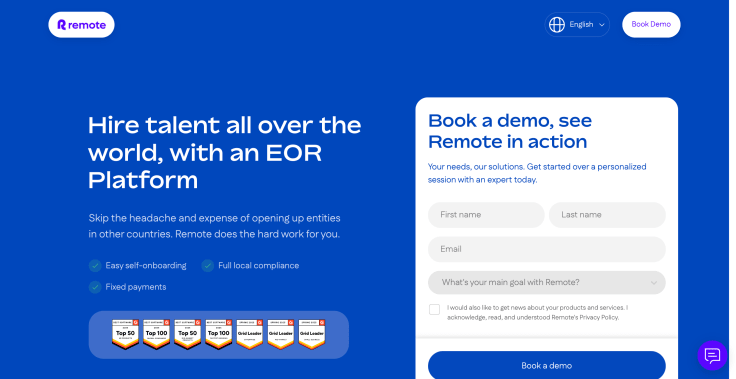
Mya automates candidate sourcing, screening, interview scheduling, and onboarding through natural, conversational AI. It integrates with popular ATS platforms like Workday, Greenhouse, and Lever.
Built for high-volume recruitment, Mya is a strong fit for large enterprises with extensive hiring needs. Its analytics tools provide insights into recruitment efficiency and candidate satisfaction.
Leena AI
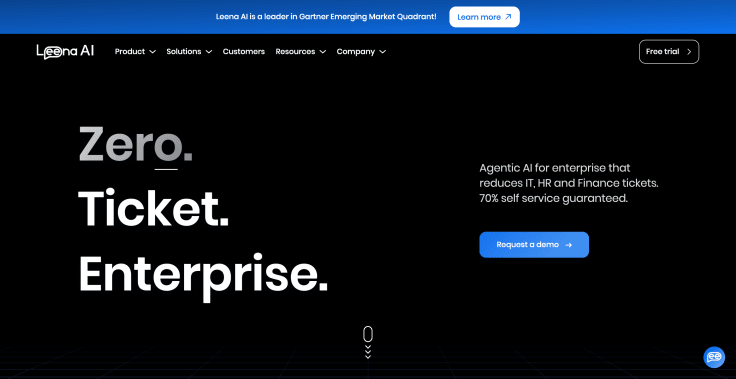
Leena AI is an enterprise-grade conversational AI platform that automates internal employee support across HR, IT, and Finance. It handles tickets, onboarding, engagement surveys, and knowledge access.
It integrates with SAP SuccessFactors, Oracle HCM, Workday, and BambooHR. Its no-code interface makes it accessible to HR professionals without technical backgrounds, and its analytics provide deep insights into employee queries, sentiment, and engagement trends.
Bloomfire AI (Talla)
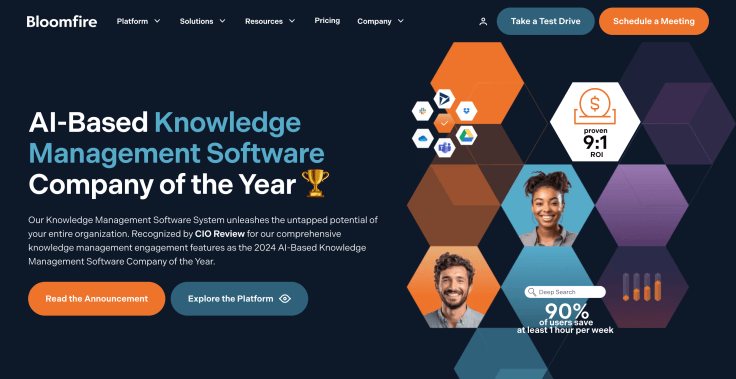
Talla focuses on HR and IT automation, making it useful across multiple departments. It provides instant responses to HR-related inquiries, manages knowledge, and supports HR helpdesk functions.
It integrates with Confluence, Slack, Microsoft Teams, and SharePoint. Performance reports and FAQ analysis help HR teams continuously improve their processes.
HiBob
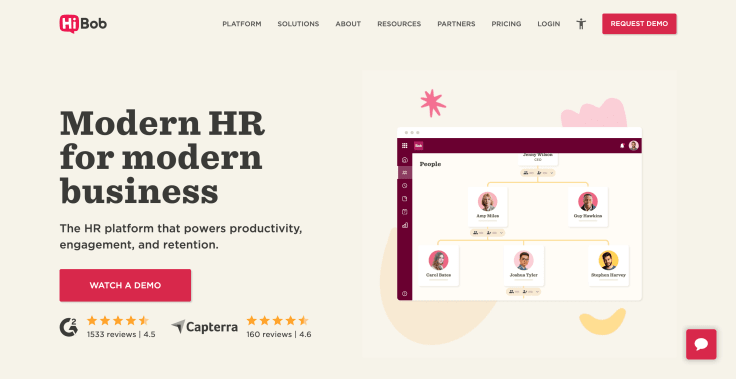
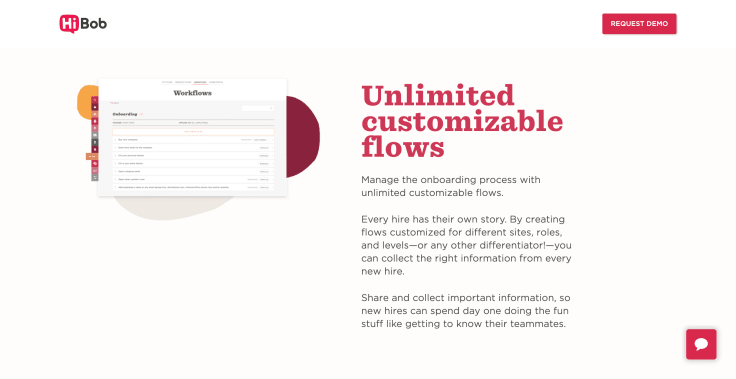
HiBob focuses on employee engagement and performance management. It integrates with Workday, BambooHR, and Google Workspace.
Its analytics cover engagement metrics and performance data, while machine learning capabilities enable personalized employee interactions. A good choice for companies that prioritize employee experience and satisfaction.
Paradox (Olivia)
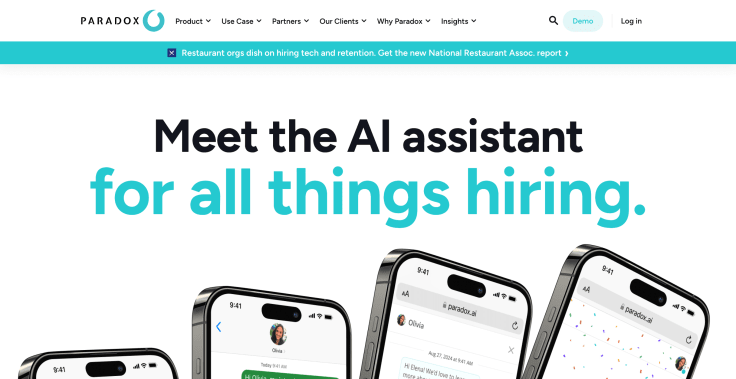
Olivia by Paradox specializes in recruitment automation and candidate engagement for high-volume hiring. It integrates with ATS platforms like Workday, Greenhouse, Taleo, and iCIMS.
Its analytics track hiring efficiency, candidate satisfaction, and process optimization. Designed for organizations with extensive job listings and fast-moving recruitment processes.
TaroWorks
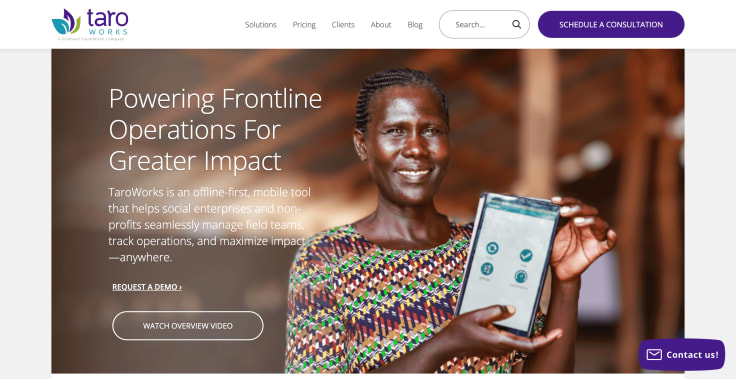
TaroWorks focuses on employee engagement, feedback collection, and knowledge management. It integrates with Salesforce, making it a natural fit for companies already in that ecosystem. HR teams can track engagement metrics and measure the effectiveness of their initiatives through built-in analytics.
Espressive (Barista)
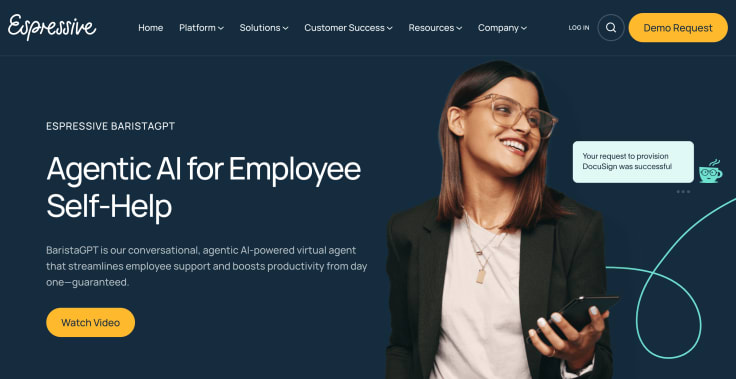
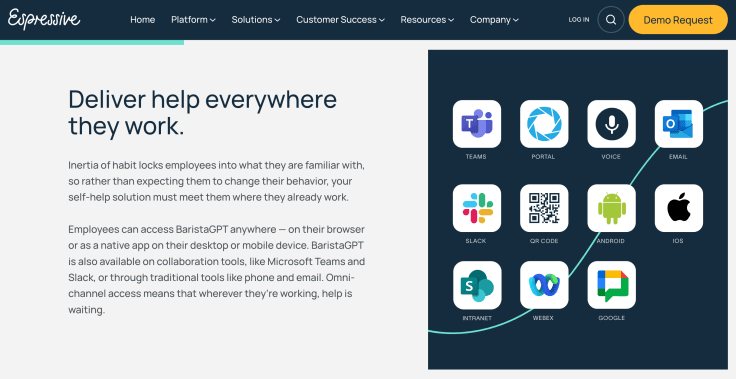
Espressive offers BaristaGPT, an AI-powered virtual assistant that automates IT, HR, and workplace support across multiple channels and languages. It delivers immediate answers to HR and IT queries, automates common requests, and integrates with systems like ServiceNow and Slack.
Its reporting features provide insights into usage patterns and productivity.
Gupy
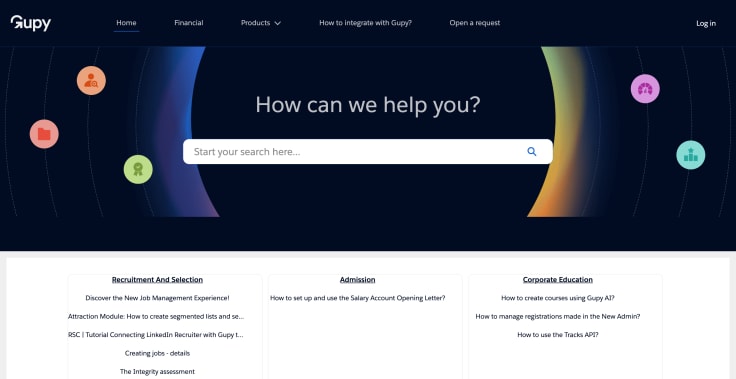
Gupy is a recruitment-focused platform that helps HR teams screen candidates, schedule interviews, collect feedback, and analyze hiring data. Its NLP capabilities support smooth communication with candidates and employees.
The intuitive design makes it accessible for HR teams of all sizes and quick to deploy.
SmartBot360
SmartBot360 is a customizable platform that covers onboarding, self-service, and feedback collection. Its user-friendly interface lets HR teams design conversation flows without technical expertise.
It integrates with Slack, Microsoft Teams, and Google Workspace. Analytics and reporting provide insights into employee interactions and HR process efficiency.
Why is ChatBot your best choice?
ChatBot brings your AI agent, live chat, and helpdesk into one workspace through the Text platform. HR teams get a no-code builder, omni-channel support, and a comprehensive feature set that covers every stage of the employee lifecycle. What sets it apart: when the chatbot reaches the limits of automation, it escalates to a human HR representative with full context, so the employee never has to repeat themselves.
Combined with multilingual support, strong security and compliance measures, and analytics that actually help HR leaders make better decisions, ChatBot is built for organizations that take both employee experience and operational efficiency seriously.
Add an AI-powered chatbot to your HR stack
HR chatbots have moved from "nice to have" to a core part of how modern HR departments operate. They automate repetitive tasks across the entire employee lifecycle, from the recruitment process and onboarding to everyday employee support and offboarding.
The result: HR teams spend less time on routine HR tasks and more time on the strategic initiatives that actually shape company culture, employee engagement, and organizational growth. The platforms covered here each bring something different to the table.
But if you want an AI-powered tool that scales, integrates with your existing systems, and connects HR automation with live chat and helpdesk in one workspace, ChatBot is worth a serious look.