

Showing top 0 results 0 results found
Showing top 0 results 0 results found



A chatbot's name is more than just a label. It's the first thing your customers see, the first impression they form, and the start of every conversation. Get it right, and users engage more, trust the bot faster, and come back. Get it wrong, and they bounce before typing a single question.
The numbers back this up:
- Around 60% of B2B companies and 42% of B2C companies now use chatbot software on their websites.
- 74% of internet users prefer chatbots for answering simple questions.
So yes, people like chatbots. But do they like your chatbot?
A lot of that comes down to the name you choose, the personality it signals, and how naturally it fits your brand. This is your step-by-step guide to finding the perfect chatbot name, with dozens of chatbot name ideas to get you started.
Why give your chatbot a name?
A chatbot name gives your bot a personality that users can connect with. Without one, visitors see a generic widget. With a good name, they see something closer to a helpful colleague (or at least a friendly assistant who doesn't put them on hold).
Naming your chatbot:
- gives customers something to refer to, the same way they'd use a person's name,
- reinforces the bot's identity and purpose,
- promotes a sense of real conversation instead of a transactional exchange.
A name helps users connect with the bot on a deeper, personal level. It makes interactions feel more natural and builds trust from the very first message.
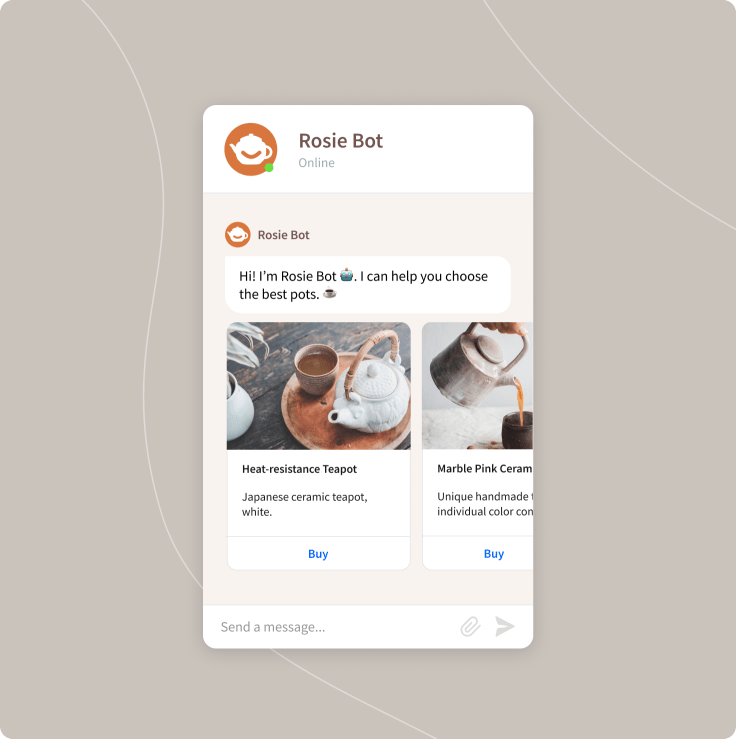
Imagine visiting your favorite pizza place's website. The chat window pops up and says "live chat." You expect a person. Instead, it's a bot, and now you're annoyed. But if the name was Delivery Bot? You'd expect exactly what it offers: information on service areas, estimated delivery times, and your order's ETA.
A named bot feels more like an old friend than an impersonal algorithm. Visitors who see a chatbot with a recognizable, relevant name are more likely to start a conversation and stick around.
Makes it clear it's a bot
If you name your bot "John Doe," visitors won't know whether they're talking to a person or a program. That matters. Typing to a live agent is a different experience from chatting with an AI chatbot, and people want to know which one they've got.
Chatbots should introduce themselves as AI in the initial greeting to maintain user trust. Transparency is not optional here. Visitors should know they're talking to a bot because:
- Bots make errors, but when a human makes the same mistake, it looks like incompetence and can hurt your company's reputation.
- Some people actually prefer the bot. Others want to find another way to reach a human. Let them choose.
- Frustration drops when the visitor knows who (or what) they're speaking with.
Ecommerce chatbots in particular need to make it clear whether the visitor is talking to a live agent or an AI. Otherwise, you risk frustrating the customer and losing a sale.
First impressions and the customer journey
A chatbot's name is the first touchpoint in the customer journey. Before the bot says anything useful, the name has already set expectations. A vague label like "Support Widget" tells the user nothing. A name like "ShopHelper" or "OrderBot" immediately signals what the chatbot offers and what it's there to do.
First impressions matter because they shape how users feel about your entire brand. A well-chosen chatbot name can increase customer satisfaction before a single question gets answered. It tells people: we thought about this, we care about your experience, and this bot is not just a tool but part of how we do business.
Create instant connections
Naming your bot with a non-descriptive or generic label can cause more harm than good. For example, these are poor names to give a bot:
- Robot123
- AI Bot
The name of your chatbot should build trust and strengthen customer engagement. It should make users feel like they're in good hands. For example:
- Happy Customer Service
- Rapid Response Team
Customers reach out when there's a problem they want solved. A chatbot with a relatable name feels more personal, and a fun, professional, catchy name paired with the right messaging can make the difference between a frustrated visitor and a loyal customer.
Offers natural conversations
You want your website's visitors to forget that they're chatting with a bot. While convenient and fast, bots can still come across as robotic if the setup feels off. Imagine if your visitor is greeted with:
- "I'm XYZ's AI Bot. I use LLMs and advanced queries to parse your text and algorithms to provide the best answers."
Most visitors would be confused. They don't know what an LLM is. Instead, you could greet them with something like:
- "I'm SuperSupport. I'm here to help you resolve customer service issues in seconds, not minutes. Ask me anything."
A simple chatbot name and a natural description encourage people to use the bot. Something as straightforward as picking the right name can mean the difference between visitors adopting the bot or abandoning it for email or phone.
How to name a chatbot: a step-by-step guide
The naming process is more than picking something catchy off a list. It requires you to think about your brand, your audience, and what the bot actually does. Here's how to approach it.
Step 1: Define the bot's purpose
What is your bot's role? If you don't know, sit down with your team and figure it out. Is it a customer service bot? A sales assistant? A lead qualifier? The bot's purpose shapes everything about its name.
It wouldn't make much sense to name your bot "AnswerGuru" if it could only process refunds. The bot's purpose will steer you toward the right kind of name, but it's just the first step.
Step 2: Build customer personas before you name your chatbot
Who is your target audience? When choosing a chatbot name, think beyond basic demographics. Consider:
- region and language,
- preferences and communication style,
- age and tech-savviness.
Researching your target audience with customer personas ensures the name resonates with the people who will actually use the bot. If your analytics show you serve mostly tech-savvy professionals, a playful name might miss the mark. If your audience skews younger, a corporate-sounding bot name could feel stiff.
You may even want different names for different audience segments, allowing for more personalization. You want to design a chatbot customers will love, and this step will help you get there.
Step 3: Match the name to your brand identity
Your brand is unique. Your chatbot name needs to match. A well-matched AI chatbot name strengthens your brand identity and keeps the customer experience consistent. Consider what your company represents, what it stands for, and how you want to be seen.
Your chatbot's name should feel like a natural part of your brand experience. If your brand's personality is warm and casual, the name should reflect that. If you're a luxury brand, something more sophisticated fits better. The name should hint at what your chatbot does while staying true to who you are.
Step 4: Choose between a human name and a bot name
This is where the naming process gets interesting. Human names can make a chatbot feel approachable and empathetic. But if you go too far (think "Susan Smith, Customer Service Rep"), visitors will assume they're chatting with a real person, and they'll be frustrated when the bot can't keep up.
Consider a gender-neutral name or a name that clearly signals "bot" without being cold or robotic. A functional name like "TalentGuide" works for HR, while a persona-driven name like "P3nny" adds character for personal finance. The key: naming a chatbot provides clarity about its function and helps users understand they are interacting with a bot.
When you add welcome text, make sure it explains that the person is talking to an AI chatbot and what it can help with.
Step 5: Pick a gender (or don't)
Bots are not people, so gender might seem irrelevant. But studies suggest that users do respond differently to gendered names. Many brands today opt for a gender-neutral name as the safest, most inclusive choice. This avoids assumptions and keeps the focus on function over personality.
AI chatbots have advanced significantly through natural language processing and machine learning. They sound more human-like than ever, which makes naming even more important. A unique chatbot name helps you stand out from the competition and gives your bot an identity that users remember.
Step 6: Test the name spoken aloud
This step gets overlooked, but it matters more than you'd think, especially if your chatbot supports voice interactions. Say the name out loud. Does it sound natural? Is it easy to pronounce? A good chatbot name should be short, catchy, and simple to say.
If the name is clunky or hard to pronounce, users won't use it. And if they can't say it, they definitely won't search for it. The best chatbot names are instantly recognizable whether read on a screen or spoken aloud.
Step 7: Check for unintended meanings
Before you commit, research the name across languages and cultures. A name that sounds great in English could have an unfortunate meaning in Spanish, Mandarin, or Arabic. Conducting a trademark search for potential chatbot names also prevents legal conflicts and ensures your name is actually unique in the industry.
Gathering diverse feedback is smart here. Test the name with a focus group or at least a few people outside your immediate team to catch anything you might have missed.
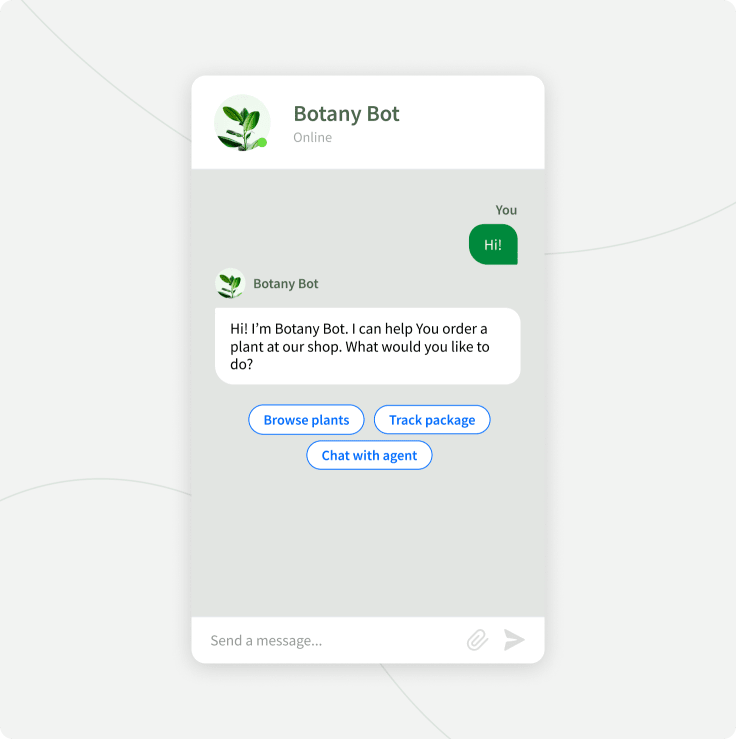
Examples of interesting chatbot name ideas
What can you name your chatbot? Pretty much anything. Below are dozens of creative bot names organized by style and purpose to spark your naming process.
You can also use names that relate to your own brand's personality. For example, if your business name is Synergistics, your bot's name could be "Synergistics.ai" or "Synergistics.bot."
Chatbot names by personality type
Not every chatbot needs the same vibe. A support bot for a hospital and a shopping assistant for a streetwear brand shouldn't sound anything alike. The bot's personality is what separates a forgettable widget from a memorable AI chatbot. The creative chatbot names and ai chatbot names below are grouped by the kind of personality they project, so you can match the right tone to your brand.
Trustworthy chatbot names
Professional and trustworthy chatbot names are important for industries that demand credibility: banking, insurance, legal, healthcare. These names should feel approachable but serious. Users need to feel that their data and their questions are in safe hands.
Examples: VaultAssist, TrustLine, SecureBot, ComplianceAI, ReliBot
Playful and approachable names
If your brand is casual and your audience expects a lighter tone, a playful name makes the bot feel approachable. These work well for lifestyle brands, consumer apps, and any context where you want users to feel comfortable asking anything. A chatbot with a helpful personality and a fun name gets more conversations started.
Examples: Zippy, BuddyBot, Sparks, CheerBot, Hiya
Sophisticated chatbot names
Luxury brands and premium services need a sophisticated chatbot name that reflects exclusivity. Whether you're building an approachable virtual assistant or a human-like AI assistant, the tone matters. A sophisticated chatbot name signals quality and attention to detail without being cold.
Examples: Aurélie, Concord, Velvet AI, Meridian, Luxe Assist
Industry-specific chatbot names
Specific industry chatbot names use relevant terminology to resonate with users and immediately communicate the chatbot's role. Choosing a name tied to your industry helps users set expectations before the conversation even starts.
Healthcare chatbots
Healthcare chatbot names need to convey empathy and security. Patients are often anxious when they reach out, so the name should feel reassuring. Steer clear of anything too casual or jokey. Names like "VitaBot" or "PulsePoint" signal competence without being cold.
Ecommerce chatbots
E-commerce chatbot names should reflect a shopping assistant vibe. Names like "CartGenie" or "StyleScout" signal that the bot is there to help find products, track orders, and solve purchase issues. For ecommerce chatbots specifically, a good name sets the expectation that the bot can do more than answer FAQs.
Real estate chatbot names
Real estate chatbot names can incorporate industry buzzwords that potential home buyers recognize. "Listing Lion" or "Property Navigator" immediately tells visitors what the bot's purpose is. For more ideas on real estate chatbots, check out our dedicated guide.
Personal finance and banking bots
Finance chatbot names should make users feel safe. Money is personal, and the last thing someone wants is to discuss their finances with a bot called "FunnyMoney." Names like "VaultBot" or "Budget Buddy" work because they balance approachability with a sense of security. For personal finance bots, the name should signal that the bot takes its job seriously.
Names for luxury brands
Luxury brands need chatbot names that match the polish of their products. A generic name would feel out of place on a high-end jewelry site or premium fashion store. Names like "Concord" or "Velvet AI" carry the same weight as the brand itself. The goal: your chatbot name should feel like it belongs in the same room as your best products.
What are some bad bot names?
The example names above should spark your creativity and inspire you to create something unique. But there are names you should steer clear of because they're too generic, confusing, or outright off-putting.
Here are some bad bot name examples:
- RoboCop AI: Names with "robo" or "cop" can create an image of surveillance or control.
- Chatty Kathy: Catchy, sure, but unprofessional and loaded with negative connotations.
- The Answer Machine: Too generic. Inject some chatbot personality into the name and make it relevant to your brand or industry.
- FriendBot: Another generic pick that implies the bot is more friend than helper.
As a general rule, steer clear of names that are:
- Offensive. Using insensitive or discriminatory language will alienate your audience and damage your reputation.
- Too similar to your brand name. Your chatbot's name can be related to your brand, but if it's too similar, you'll confuse your audience.
- Overly complex or trendy. Avoid names that will feel dated in six months. Simple and memorable chatbot names work best for long-term recall.
A bad bot name can actively hurt user engagement. Choose your bot name carefully to make sure it strengthens the experience, not weakens it.
How to use a chatbot name generator
Stuck? A chatbot name generator can get the creative wheels turning. You won't always find the perfect name on the first try, but generators are useful as a starting point.
If you want more creative control, try ChatGPT or Gemini. When generating names, provide some key details:
- your industry,
- the bot's purpose (customer support, product recommendations, etc.),
- your preferred tone (professional, friendly, funny, etc.) or any language you'd like to avoid.
Using an AI name generator can spark creativity and give you something to build on. You can refine and tweak the results with follow-up prompts until you get something close.
For quick and simple name generators, try:
- HootSuite's AI name generator. It's meant for business names, but add the "chatbot" keyword to your description, and it will produce relevant name ideas.
- BrandCrowd, which lets you choose the style and length of your name.
- Namelix, also designed for business names. With the right keywords, you can use it to generate fun and unique bot name ideas.
Name generators are great for inspiration, but always tweak the results to make them your own.
Top chatbot platforms to name your chatbot on
You've got the perfect chatbot name. Now you need the right chatbot platform to bring it to life. The best platforms let you customize your bot's identity (name, greeting, personality) while handling the heavy lifting of artificial intelligence, natural language processing, and integrations.
ChatBot
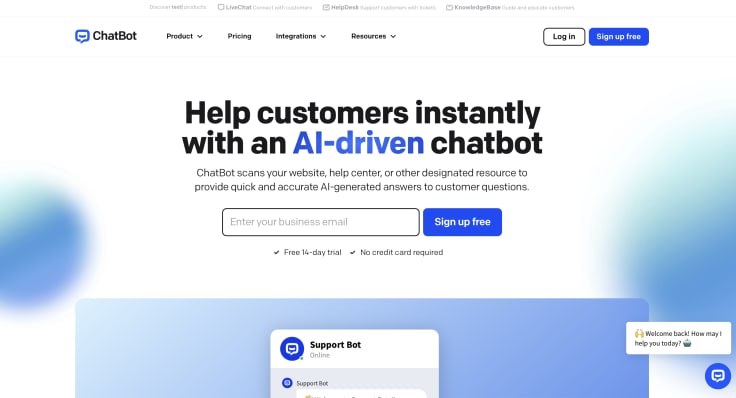
ChatBot, part of the Text platform, delivers quick and accurate AI-generated answers trained on your own business data. You don't rely on third-party models. Instead, you get your own AI framework that you can launch in minutes with no coding required.
ChatBot can be trained using help centers, websites, text documents, and more. Turn training sources on and off as needed. All data is processed and hosted on the platform, keeping everything secure.
ChatBot makes it easy to engage visitors with quick responses and personalized greetings (including, of course, that perfect chatbot name you just picked). The Text platform integrates with tools you already use, including:
- Shopify
- LiveChat
- HelpDesk
- Facebook Messenger
- Slack
- WordPress
- Zendesk
ChatBot covers all of your customer journey touchpoints automatically, and when the AI agent can't resolve an issue, it hands off to a human agent in LiveChat with full context preserved.
Standout features
- No-code, drag-and-drop builder.
- Chatbot templates you can personalize (including the name and greeting).
- AI trained on your own business data for accurate, brand-aligned responses.
- Design your bot to align with your brand's style and image.
- Analytics and intent tracking to understand what your customers actually want.
ChatBot's AI resolves up to 80% of routine queries, freeing your team to focus on the conversations that drive profit.
Tidio
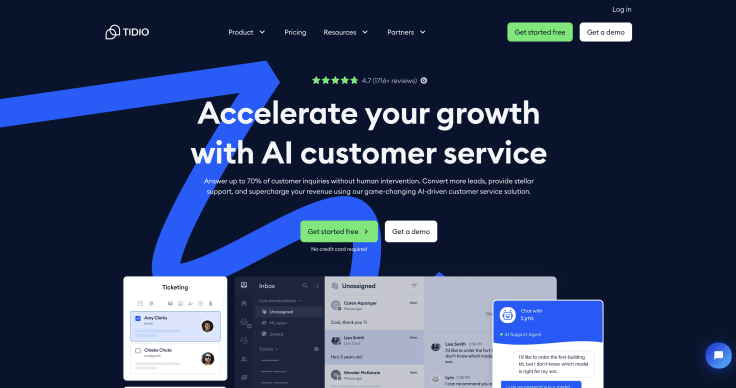
Tidio combines AI chatbot automation with human support so the customer service team can handle complex problems. The platform claims to answer up to 70% of customer questions without human intervention through Lyro, its conversational AI, which supports up to 7 languages.
Their plug-and-play chatbots can recommend products, offer discounts, recover abandoned carts, and more.
Features
- Canned responses, client data collection, and pre-chat surveys.
- Integrates with Shopify, WordPress, Zendesk, MailChimp, Hootsuite, and more.
- Visual chat builder.
- Ticketing and order management options.
Tidio is straightforward to install and has a visual builder, letting you create an advanced bot with no coding experience.
Snatchbot
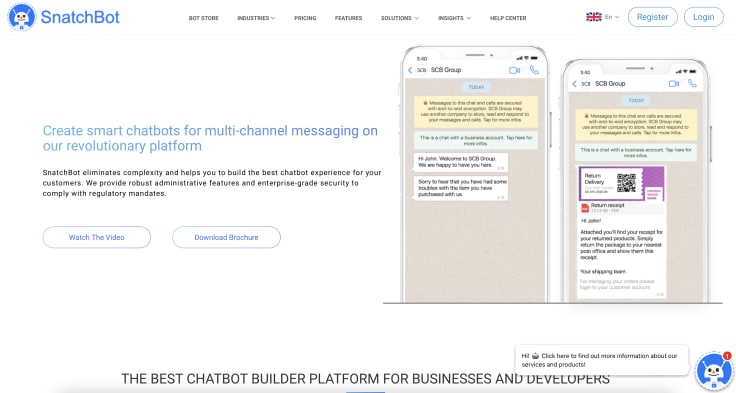
Snatchbot is an enterprise-focused chatbot platform that supports both chat and voice across channels like WhatsApp, Slack, Teams, and Telegram. Its NLP engine draws on voice recognition, multi-language support, data extraction, and machine learning to handle more complex interactions.
Features
- Omnichannel deployment across multiple messaging platforms.
- No-code visual builder with enterprise-grade security.
- GPT, Claude, and Gemini integrations for advanced AI.
- Geo-localization, translation, and text-to-speech.
Snatchbot is powerful but comes with a steeper learning curve. If you're tech-savvy or have a team to manage the setup, it can be a strong option. Plans start at $29/month, with a free tier available.
ManyChat
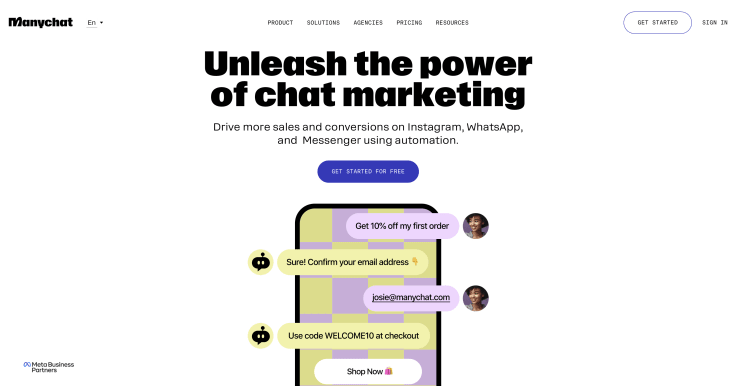
ManyChat is an automation bot built for chat marketing. A lead can ask the bot for a discount, and the bot can request their email and send a discount code, all automatically.
Features
- Instagram, WhatsApp, and Facebook Messenger integration.
- Pre-made templates.
- Bot-to-human handoff.
- Sales support, quizzes, and giveaway options.
ManyChat's templates make setup quick and easy. While solid for social media marketing, the bot has limited integrations outside of Meta's ecosystem and lacks advanced customer segmentation.
Involve your team in brainstorming chatbot name ideas
Chatbot names give your bot a personality and help customers feel comfortable when they interact with it. Involving your team in brainstorming chatbot name ideas can surface creative names you'd never come up with alone.
You want a name that is catchy, descriptive, and aligned with your brand's personality. If you have a marketing team, sit down with them. They'll bring insights about customer personas and brand voice that make the final name feel right.
The best chatbot name won't just sit in a chat widget. It'll become part of how customers remember your brand. Pick one that earns that spot.
FAQ: Chatbot naming questions answered
What makes a perfect chatbot name?
The perfect chatbot name is short, easy to pronounce, relevant to your brand, and clear about the bot's role. It should work equally well on screen and spoken aloud. Avoid names that could confuse users into thinking they're talking to a human.
Should I give my chatbot a human name?
Human names can make a chatbot feel approachable, but they come with a risk. If the name sounds too human (like a full first and last name), users may not realize they're talking to a bot. A good compromise is a human-sounding first name paired with a clear "bot" indicator in the greeting.
How does the chatbot's name affect user engagement?
A great chatbot name enhances user engagement by making the interaction feel more personal. Unique and interesting chatbot names grab attention and encourage users to interact more. A memorable name also helps your chatbot stand out, making it easier for users to remember and return.
Is a chatbot just a tool, or does the name actually matter?
A chatbot is not just a tool, and the name is not just a name. The name shapes how users feel about the entire experience. It affects whether they trust the bot, how long they stay in the conversation, and whether they come back. A great chatbot name can transform how users interact with the bot, boosting customer satisfaction.
What is the role of artificial intelligence in chatbot naming?
AI and tech-inspired chatbot names can convey innovation, but the real role of artificial intelligence is in what the bot does after the greeting. AI chatbots powered by natural language processing and machine learning can adapt to context, learn from conversations, and deliver responses that feel human. The name gets users in the door. The AI keeps them there.
How do I name your customer support chatbot specifically?
For a customer support bot, the name should signal helpfulness and reliability. Think about what your customer service automation actually does, then pick a name that reflects that purpose. Functional names like "ResolveBot" or "HelpLine AI" work because they set expectations immediately.