

Showing top 0 results 0 results found
Showing top 0 results 0 results found
All You Need to Know to Use Chatbots in Business. Complete Guide 2026



AI chatbots have gone from "nice experiment" to business standard in less than a decade. What started as simple rule-based bots on Facebook Messenger has evolved into sophisticated AI agents that simulate human conversation, qualify leads, close sales, and resolve customer queries around the clock. With generative AI and large language models now powering these systems, the gap between chatbot and human agent keeps shrinking.
The numbers back it up. The global chatbot market is projected to reach approximately $11.45 billion in 2026, growing at a compound annual growth rate (CAGR) of 23.15%. But market size alone doesn't explain why businesses are rushing to adopt. The real story? AI chatbots are turning customer service from a cost center into a profit engine.
This chatbot guide breaks it all down: what chatbots are, how they work, and why they're a must-have for modern businesses. Whether you want to improve customer experience and support, boost engagement, or turn support conversations into sales, you'll learn how AI chatbots can fit into your strategy.
What is a chatbot?
How do chatbots work?
The brief history of chatbots
How to build a chatbot
Why do businesses need chatbots?
Chatbot use cases
What is a chatbot?
A chatbot is an AI-powered software application designed to simulate human conversation through text or voice interactions. It uses artificial intelligence (AI), machine learning (ML), natural language processing (NLP), and natural language understanding (NLU) to understand user intent, interpret inputs, and deliver relevant, conversational responses in real time. Modern AI chatbots leverage large language models (LLMs) to generate human-like responses, and the best ones learn and refine their answers as they collect more conversational data.
Where can you use chatbots?
Modern AI chatbots integrate seamlessly with websites, live chat tools, mobile apps, and messaging platforms like Facebook Messenger, WhatsApp, or Slack. They can automate support at scale across these channels, enabling automated interactions on platforms that customers already use and improving convenience and accessibility. AI chatbots operate through text or voice interfaces, and the best ones maintain conversation history across sessions for a seamless customer experience.
Fact: Chatbots exist under many names: conversational agents, AI assistants, AI agents, virtual assistants, digital assistants, conversational AI chatbots, or AI-powered chat assistants.
How do chatbots work?
Chatbots operate using either predefined rules or advanced AI technologies. Depending on their underlying mechanism, they process human language (customer queries), interpret user intent, and deliver appropriate responses. Businesses typically leverage three main types of chatbots, each designed to match different operational needs:
- Rule-based chatbots
- AI chatbots
- Hybrid chatbots
Rule-based chatbots
A rule-based chatbot (also called command-based, keyword, transactional, or pattern-matching) communicates using predefined answers.
These virtual assistants can be playfully compared to movie actors because they always stick to the script. They provide answers based on a set of if/then rules that can vary in complexity. These rules are defined in the chatbot implementation process.
It's worth adding that rule-based chatbots don't understand the context of the conversation. They provide matching answers only when users type a keyword or phrase they were programmed to recognize. Rule-based chatbots are limited to their predetermined rules and cannot respond to unanticipated inputs.
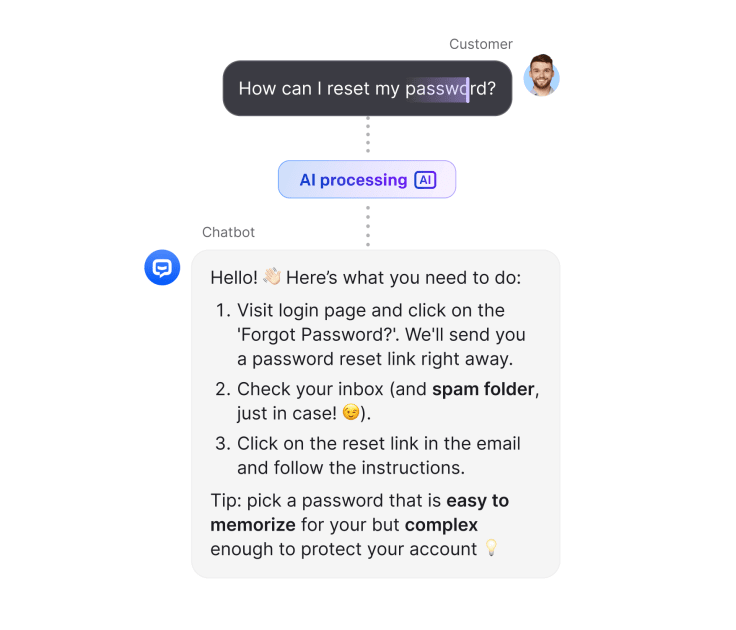
When a rule-based bot is asked, “How can I reset my password?” it first looks for familiar keywords in the sentence. In this example, “reset” and “password” are the keywords. Then, it matches these keywords with responses available in its database to provide the answer.
However, if anything outside the rule-based chatbot's scope is presented, like a different spelling or dialect, it might fail to match that question with an answer. Because of this, rule-based bots often ask users to rephrase their questions.
It's worth underlining that a rule-based chat interface can't learn from past experiences. They respond based on what they know at that moment. The only way to improve a rule-based bot for future interactions is to equip it with more predefined answers and improve its rule-based mechanisms.
While rule-based bots are still widely used, many businesses are enhancing them with AI to provide better, more flexible responses and better user entity recognition.
AI chatbots
An AI chatbot is software that interacts with users in a human-like manner and can imitate natural human conversation. Unlike rule-based bots, AI chatbots use machine learning algorithms, natural language processing (NLP), and deep learning to understand context, predict user needs, and generate unique, context-aware responses. These AI systems analyze customer interactions at an almost human level, providing tailored responses based on visitor data.
- AI empowers computers to perform tasks requiring human-like reasoning, such as understanding human language, managing conversations, making decisions, and learning from interactions. Artificial intelligence integrates fields like computer science, data analysis, speech recognition, linguistics, and psychology. The field is constantly evolving through advancements in deep learning and generative AI models.
- ML allows AI chatbots to identify patterns, make decisions, and improve from past and real-time interactions. Large language models (LLMs), trained on vast amounts of data, dynamically refine responses based on new inputs. Unlike rule-based chatbots, AI chatbots use machine learning algorithms to enhance accuracy, generate relevant responses, and adjust tone or style in real time. This enables personalized recommendations, advanced troubleshooting, and natural conversations that continuously improve with ongoing optimization.
- NLP is a core technology that makes AI chatbots understand, interpret, and generate human-like conversations. Context-aware AI with advanced natural language processing allows chatbots to remember interactions and provide personalized experiences. Whether in customer support, ecommerce, or healthcare, AI chatbots now recognize user intent, grasp context despite errors or slang, and deliver seamless, conversational responses across sessions.
- Sentiment analysis lets AI chatbots gauge user emotions in real time. By analyzing text, voice tone, emojis, and speech patterns, chatbots can determine if a user is frustrated, satisfied, or neutral and adjust their responses accordingly. Emotion-aware AI enhances sentiment analysis by enabling chatbots to modify tone, suggest empathetic solutions, or escalate issues when necessary.
Fact: Some languages are more difficult for chatbots to process. Languages such as Polish, Finnish, Spanish, or Hindi, whose verbs may present a wide range of variations, are more difficult for a chatbot to master than languages with less complex structures.
Hybrid chatbots
Interacting with chatbots used to feel like talking to an answering machine: repetitive, robotic, and frustrating. If a customer didn’t phrase their question exactly right, they’d get the familiar and unhelpful response: “I’m sorry, I don’t understand.”
Then came AI chatbots, which seemed like the solution to everything. They could generate fluid, human-like conversations, offering quick and engaging responses. But these AI-driven bots had their flaws. They sometimes misunderstood key details, provided inaccurate answers, or worse, invented information when they didn't know the answer (a problem known as AI hallucination).
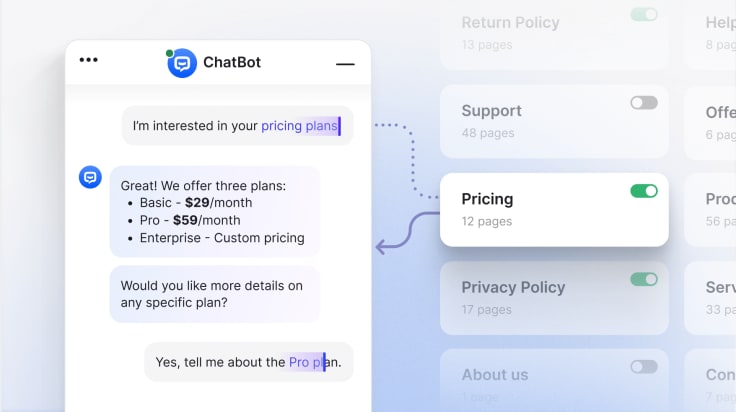
Faced with these challenges, many businesses realized they needed a middle ground: a chatbot that could offer AI-powered flexibility while maintaining structured reliability. This is where hybrid chatbots emerged as the gold standard.
Keeping brand messaging on point
In regulated industries like finance, healthcare, or insurance, one wrong number can tank customer trust. AI chatbots are great at simplifying complex topics, but they can also get creative with details they shouldn't.
A hybrid model fixes this: let AI handle general inquiries, keep rule-based responses locked in for anything sensitive (like rates, policies, or compliance info). Accuracy where it counts, flexibility everywhere else.
Preventing AI from guessing when it doesn't know
Here's a fun quirk of AI chatbots: when they don't know the answer, they sometimes make one up anyway. Confidently. This is called hallucination, and it's a real problem when customers are making decisions based on what your bot tells them.
Hybrid chatbots solve this with techniques like Retrieval-Augmented Generation (RAG), which grounds responses in verified, uploaded data instead of letting the AI improvise. For anything outside the knowledge base, the bot redirects to trusted resources or escalates to a human agent. No guessing, even in edge cases.
Smarter escalation to human agents
Nothing frustrates a customer faster than getting stuck in a chatbot loop, asking the same question three different ways and getting the same unhelpful response.
A hybrid model recognizes when it's out of its depth and hands the conversation to a live agent with full context intact. The customer doesn't have to repeat themselves. The agent doesn't have to start from scratch. Everyone wins.
Balancing personalization without crossing the line
AI chatbots can deliver impressively tailored recommendations based on customer data. But there's a fine line between "helpful" and "how does it know that about me?"
A hybrid approach uses AI for relevant suggestions while applying structured data controls to respect privacy. Personalization that feels useful, not surveillance.
Cost savings without sacrificing quality
Automating everything sounds great on a spreadsheet, but fully AI-driven models can frustrate customers when they hit a wall.
Hybrid chatbots balance this by handling routine inquiries automatically, using rule-based responses where precision matters, and escalating only when a human touch is genuinely needed. Lower operational costs and higher customer satisfaction, not one at the expense of the other.
Hybrid chatbots combine AI efficiency with structured safeguards to ensure accuracy. They use automation for speed but involve human support when needed. As a result, customer satisfaction rises, personalization respects privacy, and costs go down, making customer service more reliable and effective.
Rule-based chatbots, AI chatbots, and hybrid chatbots comparison
|
How they work |
Business benefits |
Limitations |
|
|
Rule-based chatbots |
- Operate on an if-then logic (for instance, if a user types “reset password,” the bot provides password reset steps)
|
- Cost-effective and quick to deploy
|
- Struggle with complex queries and require exact keywords to function properly
|
|
AI chatbots |
- Use machine learning and natural language processing to understand user intent and generate dynamic responses
|
- Handle complex, open-ended conversations effectively
|
- Require high-quality training data and continuous refinement
|
|
Hybrid chatbots |
- Combine rule-based logic with AI to provide structured yet flexible interactions
|
- Balance automation with human-like adaptability
|
- Require initial setup to align AI and rule-based workflows
|
The brief history of chatbots
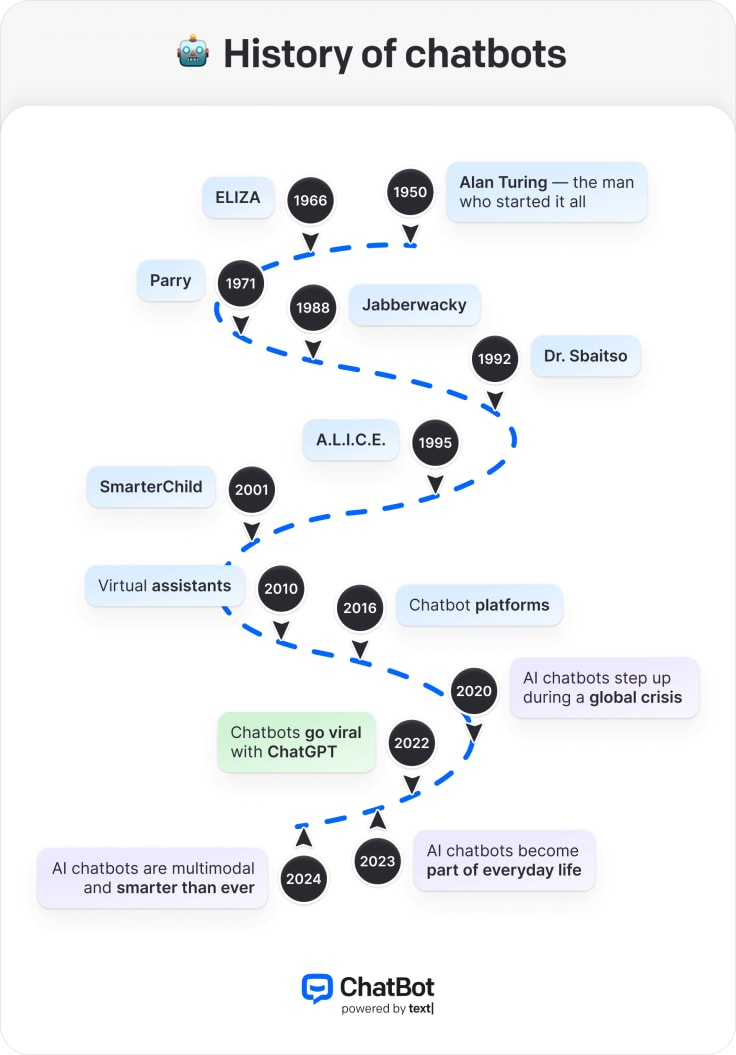
Conversational interfaces aren't a modern invention. They were born out of curiosity and creative thinking over half a century ago.
1950: Alan Turing, the man who started it all
Alan Turing, often hailed as the pioneer of computer science and artificial intelligence, made groundbreaking contributions that laid the foundation for modern AI and chatbots. Turing proposed the Turing Test, a measure designed to evaluate a machine's ability to exhibit intelligent behavior indistinguishable from a human's. This test involves a human judge engaging in a conversation with both a human and a machine without knowing which is which. If the judge cannot reliably distinguish the machine from the human, the machine is considered to have passed the test.
Turing's visionary work in artificial intelligence had a profound impact on the development of chatbots and other AI-powered systems.
1966: Eliza, the first chatbot
MIT professor Joseph Weizenbaum developed Eliza, one of the first programs to simulate human-like conversation. Often considered the first chatbot, Eliza used pattern matching and scripted responses to mimic a Rogerian psychotherapist. It did not understand the language but could create the illusion of conversation by reflecting users' statements. For example, if a user said, “My mother loves flowers,” Eliza might respond, “Tell me more about your mother.”
1971: Parry
Kenneth Colby, a Stanford Artificial Intelligence Laboratory psychiatrist, wondered if computers could contribute to understanding brain function. He believed that computers could help treat patients with mental diseases.
These thoughts led Colby to develop Parry, a computer program that simulated a person with schizophrenia. Colby believed that Parry could help educate medical students before they started treating patients. Parry was tested against human psychiatrists, who often struggled to distinguish it from real patients. Its creation initiated a serious debate about the possibilities of artificial intelligence at the time.
💡 Fact: In 1978, Colby developed the first intelligent speech prosthesis, a computer program that helped people with communication disorders speak.
1988: Jabberwacky
Self-taught programmer Rollo Carpenter began developing Jabberwacky, a chatbot designed for entertaining, human-like conversation. Unlike rule-based programs, Jabberwacky learned from past interactions, improving its responses over time. Though it did not truly "understand" users, it created the illusion of personality by mimicking previous conversations. Its development laid the groundwork for Cleverbot, a more advanced AI-powered chatbot released in the 2000s.
1992: Dr. Sbaitso
Creative Labs, a technology company based in Singapore, developed Dr. Sbaitso. It was an AI speech synthesis program that imitated a psychologist. The program was distributed with sound cards sold by the company. They wanted to show the digitized voices their cards were able to produce.
1995: A.L.I.C.E.
Richard Wallace developed Artificial Linguistic Internet Computer Entity (A.L.I.C.E.), an advanced chatbot designed to simulate natural conversation. Inspired by Eliza, A.L.I.C.E. used pattern matching and heuristic rules to generate responses. Unlike earlier chatbots, it relied on Artificial Intelligence Markup Language (AIML), allowing more dynamic conversations.
Wallace released A.L.I.C.E.’s code as open source, enabling other developers to create their own conversational AI. The chatbot influenced many later AI systems, shaping the development of modern virtual assistants.
Fun fact: Alice was an inspiration for an American science-fiction romantic drama Her, a film about a man who falls in love with a chatbot.
2001: SmarterChild
SmarterChild was an intelligent chat interface built on AOL Instant Messenger by ActiveBuddy, a brand that creates conversational interfaces. It was designed to have a natural conversation with users. SmarterChild is considered a precursor to Apple's Siri.
2010: Virtual assistants
Since 2010, when Apple launched Siri, virtual assistants have been on the rise. Siri was the first personal assistant available worldwide. Google followed in Apple's footsteps by releasing Google Now in 2012. Microsoft's Cortana and Amazon's Alexa were both released in 2014.
2016: Chatbot platforms
Facebook opened its Messenger platform to chatbots, allowing businesses and developers to create automated conversational agents. This move fueled the rapid growth of chatbot technology, making automated customer support and interactive messaging more accessible.
By 2018, Messenger had over 300,000 active bots, assisting users with tasks like shopping, booking appointments, and customer service. Over the years, chatbot technology has advanced significantly, integrating AI and natural language processing for more sophisticated interactions.
2020: AI chatbots step up during a global crisis
As the world shut down due to the COVID-19 pandemic, AI chatbots became frontline responders. Healthcare organizations and governments scrambled to provide reliable information, and chatbots became an essential tool. The World Health Organization (WHO) launched its WhatsApp chatbot on March 20, 2020, instantly connecting people with accurate COVID-19 updates. Meanwhile, the UK’s National Health Service (NHS) introduced an AI-powered chatbot to help triage potential cases, easing the burden on overwhelmed phone lines.
Beyond healthcare, businesses turned to AI chatbots for survival. With customer service teams working remotely or facing staff shortages, automated bots kept operations running. Banking apps rolled out AI assistants to handle increased queries about loan deferrals, while ecommerce platforms used chatbots to manage a surge in online shopping. This period marked the true beginning of chatbots as indispensable digital workers rather than just a novelty.
2022: Chatbots go viral with ChatGPT
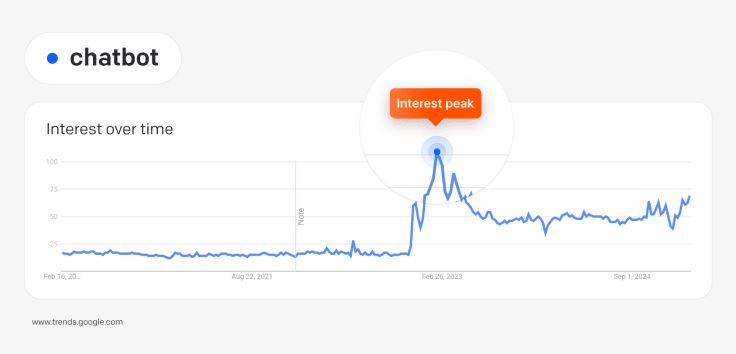
Until 2022, AI chatbots were improving but still had their limitations. Then, on November 30, 2022, OpenAI released ChatGPT, and everything changed. Within five days, over a million users had signed up to test this groundbreaking conversational AI. ChatGPT wasn’t just another chatbot. It could write essays, debug code, explain complex topics, and even crack jokes with near-human fluency.
Tech companies immediately took notice. Microsoft quickly partnered with OpenAI, announcing in early 2023 that it would integrate ChatGPT into Bing, turning the aging search engine into an AI-powered assistant. Google, caught off guard, rushed to announce Bard in February 2023, marking the start of a fierce AI arms race.
2023: AI chatbots become part of everyday life
By early 2023, chatbots weren’t just helping businesses. They were everywhere. People were using ChatGPT and similar models for everything from writing resumes to planning vacations. Companies that previously treated chatbots as optional tools were now building AI-powered customer experiences around them.
On March 14, 2023, OpenAI launched GPT-4, a more powerful and multimodal AI capable of understanding both text and images. This opened new possibilities: AI assistants could now analyze photos, generate visuals, and even interpret handwriting.
Meanwhile, Snapchat launched its AI chatbot, My AI, in April 2023, allowing users to chat with an AI as if it were a friend. In the finance sector, banks began rolling out AI-powered financial advisors to help customers with budgeting and investments. The chatbot boom was officially in full swing.
Yet, with this rapid adoption came concerns. Companies faced backlash when chatbots gave misleading or biased responses. AI hallucinations (when a chatbot confidently makes up incorrect information) became a hot topic. Businesses realized that while AI chatbots were powerful, they still needed human oversight and safeguards.
2024: AI chatbots become multimodal and smarter than ever
By January 2024, chatbots were no longer just text-based tools. The newest AI assistants could now process voice, images, and even generate videos, making interactions more natural and intuitive. Snapping a photo of a broken appliance and having an AI chatbot diagnose the issue instantly? That was becoming a reality.
On February 8, 2024, Google launched Gemini, its next-generation AI model, which promised better reasoning and multimodal capabilities. Meanwhile, OpenAI introduced custom GPTs, allowing businesses and individuals to train AI chatbots for specific tasks without needing technical expertise. Suddenly, everyone from small business owners to educators could create their own personalized AI assistant.
Retailers embraced AI like never before. Amazon integrated AI into Alexa, making it more conversational and proactive in assisting users. In ecommerce, AI shopping assistants became a standard feature, helping customers find products, compare prices, and even generate outfit suggestions.
With multimodal capabilities and personalized AI assistants, chatbots were no longer just for answering questions. They were actively shaping how people worked, learned, and made decisions.
2025: AI agents go mainstream
If 2024 was the year chatbots got smarter, 2025 was the year they started getting things done. The release of OpenAI's GPT-5 in August marked a major leap in agentic AI capabilities. These weren't just conversational models anymore; they could perform web search, take actions, and complete multi-step tasks autonomously. Google Gemini continued to evolve with stronger reasoning and multimodal features, and AI companies across the board pushed the boundaries of what AI systems could handle independently.
The term "AI agent" went from industry jargon to boardroom vocabulary. Businesses shifted from asking "should we use a chatbot?" to "how do we deploy AI agents across our entire customer journey?" Customer service platforms began integrating AI agents with live chat and helpdesk tools into unified workspaces, making it possible to manage the full customer experience from a single dashboard. Retrieval-Augmented Generation (RAG) became a standard approach, ensuring AI chatbots could answer questions based on uploaded business data rather than generating hallucinated responses.
Meanwhile, transparency and security standards took center stage. The EU AI Act went into effect, requiring businesses to implement proper safeguards, disclose when customers are interacting with AI, and comply with stricter data privacy regulations including GDPR and CCPA. For businesses, this meant that implementing encryption and access controls was no longer optional but a baseline requirement.
How to build a chatbot in 2026
Building a chatbot has never been easier with a range of no-code platforms, low-code frameworks, and custom AI solutions. Businesses can choose between quick and accessible chatbot platforms or fully customized AI-powered assistants depending on their needs, budget, and technical expertise.
Whether the goal is to automate customer service, marketing lead generation, or sales, advanced tools are available to create smarter AI-driven chatbots.
Using a chatbot platform for quick deployment
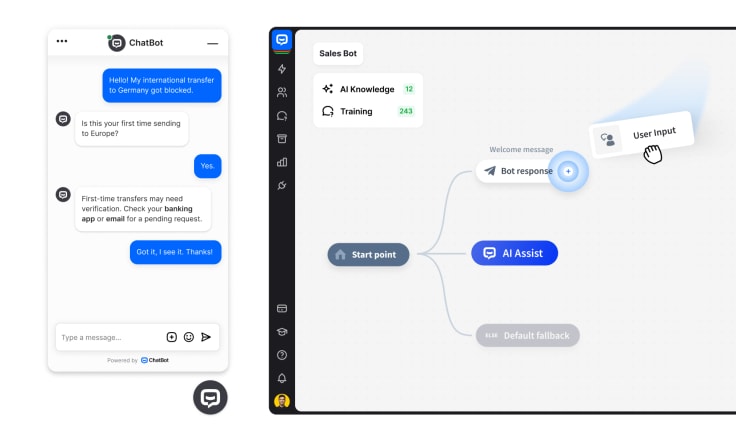
Using a chatbot platform remains the fastest and most efficient way to create and launch a chatbot. Today's chatbot platforms have evolved into AI-powered automation hubs with built-in drag-and-drop workflow builders, pre-trained AI templates, and seamless omnichannel integrations. These platforms are designed for businesses that need an AI agent without investing in complex development.
Why chatbot platforms are the best choice for many businesses
No coding required – Create chatbots with simple drag-and-drop interfaces.
Pre-built AI templates – Ready-to-use chatbots for customer service, ecommerce, lead qualification, and support.
Omnichannel capabilities – Deploy chatbots on websites, Messenger, Slack, and more.
AI-powered NLP – Improve chatbot responses with generative AI and natural language processing.
Integration with business tools – Connect with Salesforce, Zendesk, Shopify, HubSpot, and many others.
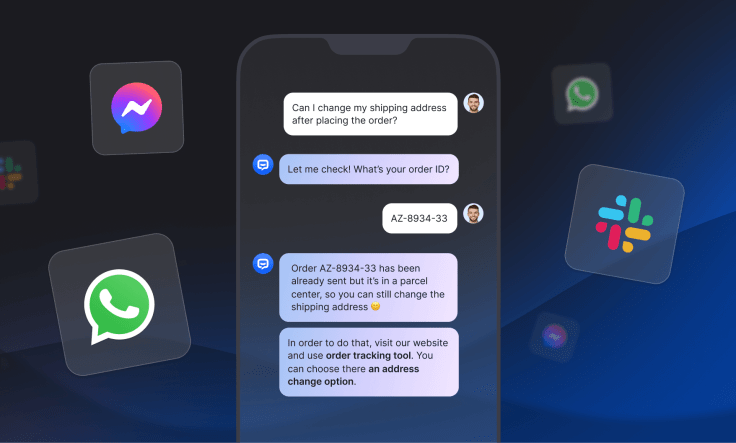
For businesses looking for fast, cost-effective, and scalable AI, chatbot platforms provide an easy entry point. They allow teams to deploy a working chatbot in minutes without needing technical expertise. Most platforms offer a free version or free trial, so you can test a free AI chatbot before committing to paid plans.
Chatbot platforms make business automation accessible. Many of them offer simple drag-and-drop builders. They allow for building and implementing chatbots with little or no coding. This helps to popularize chatbots among less technical users who get a chance to develop their own chatbot projects.
Kacper Wiącek, Product Experts Lead
Why ChatBot is the best AI chatbot platform for business
Among chatbot platforms, ChatBot stands out for businesses focused on customer service, lead qualification, and sales acceleration. It offers an intuitive, no-code interface that allows companies to create and launch AI agents without any coding experience, making it accessible to businesses of all sizes.
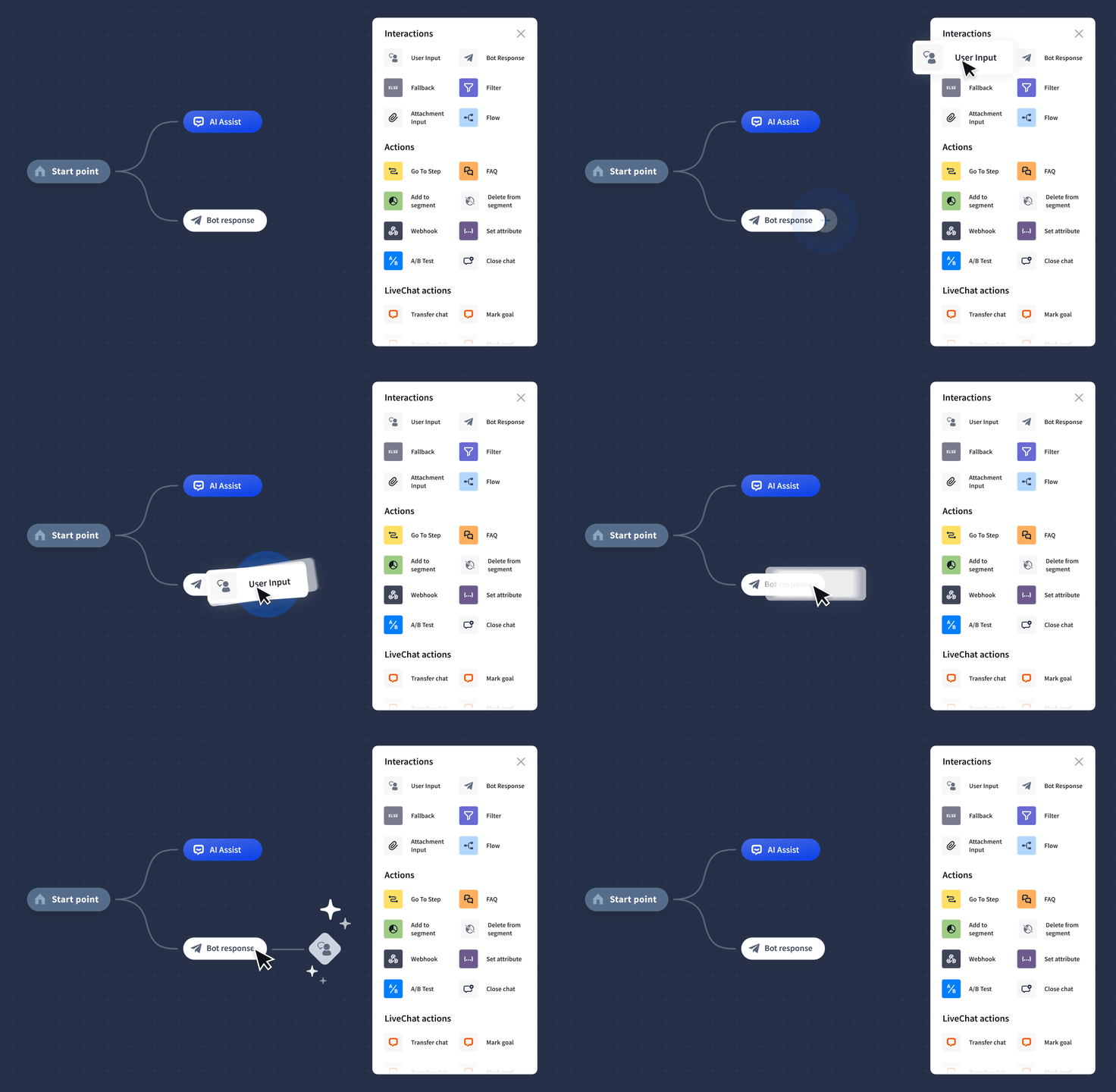
With AI-powered automation features, businesses can handle customer queries, generate qualified leads, and drive sales while maintaining natural, engaging human interaction. ChatBot provides pre-built templates, intelligent response mechanisms, and seamless integration with multiple channels (websites, social media, messaging apps) for a smooth customer experience across every touchpoint.
What makes ChatBot particularly effective is how it connects the dots. When the AI agent can't resolve an issue, it hands off to a human agent in live chat with full context and conversation history preserved. That means no repeated questions, no lost data, and no frustrated customers trapped in automated loops. Support agents see the complete picture, and customers get faster resolutions. The entire workflow (AI agent, live chat, helpdesk) lives in one workspace.
Unlike AI frameworks that demand extensive development and technical expertise, ChatBot simplifies the process, allowing businesses to implement and refine their AI chatbot strategy quickly and without significant overhead. Try the platform for free with a 14-day trial and see the difference an AI agent trained on your business data can make.
Building a custom chatbot with AI frameworks and APIs
For businesses requiring AI assistants with deep integrations and advanced customization, developing a chatbot using AI frameworks and APIs offers flexibility and control. Creating a chatbot from scratch has become more accessible than ever due to AI development tools that provide pre-trained models and scalable architectures.
Several AI frameworks and APIs support chatbot development, each catering to different needs. OpenAI’s GPT-5 series, for example, focuses on conversational AI, enabling natural dialogue, contextual understanding, and advanced agentic capabilities.
Others, such as Google Gemini AI, specialize in multimodal capabilities, processing text, voice, and images. Enterprise solutions like Microsoft Azure AI Bot Services provide scalability and cloud integration, making them suitable for large-scale business applications.
These frameworks allow businesses to train AI assistants on proprietary data, ensuring seamless integration with internal systems and more tailored responses. Custom AI chatbots are particularly beneficial in industries like finance, healthcare, legal services, and enterprise automation, where security, accuracy, and compliance are essential.
Before committing to a fully custom chatbot, businesses should first experiment with platform-based solutions (like ChatBot) to define their key requirements. This allows companies to understand what works before investing in large-scale AI development. Many teams find that a no-code AI agent, paired with live chat and helpdesk in a unified workspace, covers 80% or more of their needs without writing a single line of code.
Why do businesses need chatbots?
Customer expectations have changed. People want immediate responses, personalized answers, and support on their preferred channel, whether that's a website, mobile app, or social media. Meeting those expectations around the clock, across multiple channels, with a human-only team is expensive and hard to scale.
AI chatbots solve this by handling the high-volume, repetitive customer queries that eat up support agent time, while keeping the door open for human agents to step in on complex issues. The implementation of chatbots can lead to a 30% reduction in operational costs by autonomously resolving common customer service issues. But cost savings are just the starting point.
The real opportunity is what happens when you stop treating customer service as a cost center and start treating it as a profit engine. Your support team talks to more prospects in a week than your sales team sees in a month. Every product question is purchase consideration. Every shipping inquiry signals buying urgency. AI agents are built to spot these moments and act on them: recommending products, qualifying leads, recovering abandoned carts, and routing high-value conversations to the right sales rep.
What tasks can be automated with chatbots?
The primary role of chatbot technology is to automate conversations and handle user interactions without human intervention. Chatbots are used to:
- Enhance customer experience by providing instant, 24/7 responses to customer queries.
- Reduce wait times and manage multiple conversations simultaneously (up to 500 at once).
- Increase sales and lead qualification through automated recommendations, personalized messaging, and proactive engagement with website visitors.
- Support human agents by handling routine inquiries so they can focus on complex issues that require empathy and creative problem-solving.
- Capture valuable customer data and business intelligence by tracking interactions, identifying pain points, and surfacing common customer issues. Monitoring KPIs such as containment rate and customer satisfaction (CSAT) helps analyze and improve overall performance over time.
Chatbot use cases
Chatbots in customer support
Customers want their problems handled immediately through the channels they prefer. AI chatbots make that possible by redefining what customer service looks like. Modern AI chatbots can communicate fluently in multiple languages, allowing businesses to serve a diverse, global customer base without hiring multilingual support teams.
They support customers 24/7 and enable them to solve simple problems, book appointments, or submit complaints. AI-powered chatbots allow companies to scale their services at low cost but, more importantly, meet changing customer expectations. A well-designed chatbot can answer FAQs, qualify leads, and perform actions like booking meetings, often reducing support costs by up to 30%. And when a customer query goes beyond what the AI can handle, smart escalation to a human agent (with full conversation history preserved) ensures nothing falls through the cracks.
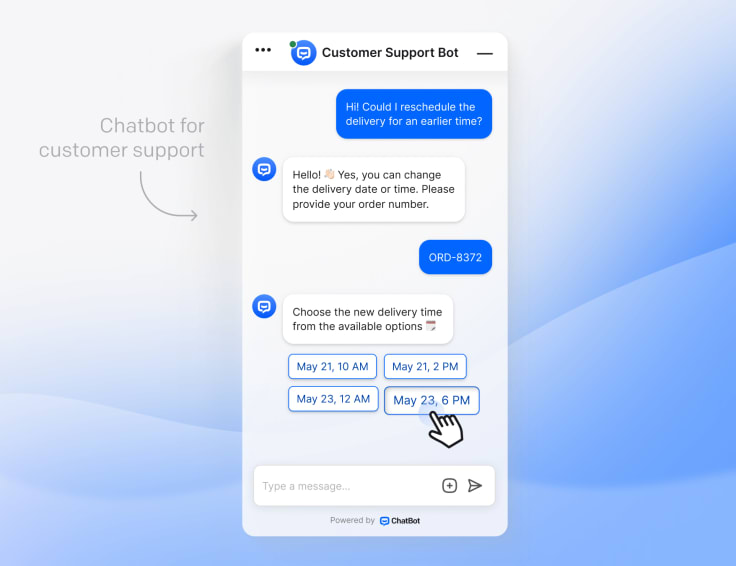
Take Mastercard, for instance. The brand offers a messenger bot to help customers easily check their account transactions anytime.
In the healthcare industry, Cleveland Clinic has introduced a chatbot to assist patients in finding doctors, scheduling appointments, and answering frequently asked questions about treatments. The bot helps reduce call center wait times and ensures patients get immediate assistance.
Similarly, Amtrak, the national rail service, uses a virtual assistant, Julie, to help passengers book train tickets and answer common travel inquiries. Since implementing Julie, Amtrak has significantly increased bookings and user satisfaction.
Chatbots in marketing
Brands use conversational agents to diversify their customer engagement strategy. With them, businesses engage website visitors proactively and, eventually, sell more products.
One of the brands that took their online service to the next level using a bot is Sephora. The company uses it to educate customers about its products. Their AI assistant offers makeup tutorials and skincare tips and helps customers purchase products online. The company even enables its customers to try new makeup using AR technology implemented in their chatbot. By doing this, Sephora has delivered its personalized customer experience in-store and online.
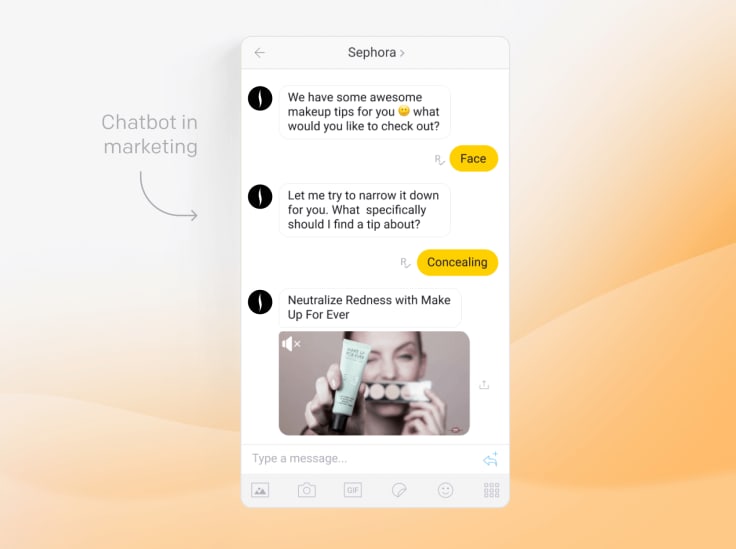
Another major player that uses chatbots effectively is Nike. To engage with customers, the brand launched a Messenger chatbot that recommends sneaker models based on user preferences and helps them purchase exclusive releases. The bot even allows users to design their own custom sneakers and share them with friends before buying, turning the shopping experience into an interactive journey.
Chatbots in sales
Every customer moves through the sales funnel before purchasing a product, and AI chatbots can guide them through each stage: awareness, interest, decision, and action. This isn't just about answering the same questions over and over. It's sales acceleration. According to Gartner, 24/7 AI-powered support can lead to a 20-30% increase in sales conversions. When an AI agent spots a buying signal in a support conversation, it can recommend a product, offer a discount, or route the visitor to a sales rep before the moment passes.
Conversational interfaces integrate into social media platforms, letting brands connect with many users and increase their brand awareness. Take, for example, National Geographic. The company has used a messenger bot to carry out a daily quiz with users. By doing this, the brand attracted users' attention to its new ebook, Almanac. The brand's bot also encouraged users to purchase the title by offering a 10% discount, which boosted its sales.
Global giant Starbucks uses an AI agent to help customers compose their favorite coffee drink. It enables customers to order a drink on the go and pick it up at a chosen café. It translates into a better brand experience because customers don't have to stand in a long line.
Retailers have also leveraged AI assistants to streamline shopping experiences. Walmart, for instance, introduced a voice-ordering chatbot integrated with Google Assistant, allowing customers to add items to their cart hands-free. This innovation makes grocery shopping easier and more convenient for busy customers.
Chatbots in ecommerce and retail
Ecommerce businesses are increasingly turning to AI chatbots to automate customer interactions and improve the shopping experience. With an AI-powered shopping assistant, brands can provide personalized recommendations based on browsing history, guide customers through purchasing, and handle post-purchase inquiries. AI chatbots can streamline processes such as order tracking and account management, enhancing self-service capabilities while freeing up sales teams for higher-value conversations.
Take H&M, for example. The fashion retailer launched a chatbot that helps customers find clothing items based on their style preferences. By asking users a few quick questions, the bot curates a selection of outfits that match their taste, making online shopping more engaging and interactive.
Similarly, Nordstrom has integrated AI chat technology to assist shoppers with product searches and availability. The chatbot helps customers navigate the retailer’s extensive catalog and even suggests complementary products, boosting cross-sell and upsell opportunities.
Retail giants like Amazon take this a step further. Their AI-powered voice assistant, Alexa, helps customers shop hands-free and provides order tracking, product recommendations, and even customer service support. This seamless integration between AI and retail allows brands to offer a more intuitive and personalized shopping experience.
Chatbots in healthcare
The healthcare industry has seen significant improvements in patient engagement and service efficiency through chatbots. They help clinics and hospitals manage appointment scheduling, medication reminders, and patient inquiries while reducing the workload on medical staff.
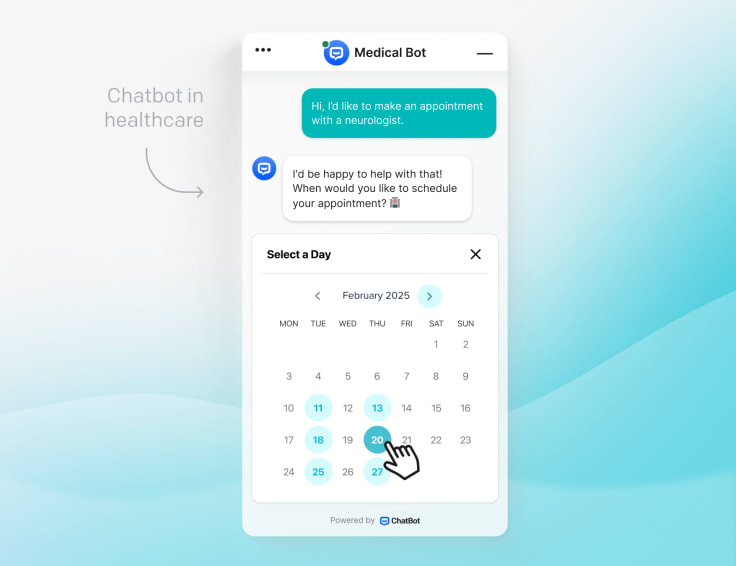
For instance, the Mayo Clinic developed a chatbot that provides reliable health information, answering common medical questions based on evidence-based research. This tool helps patients access important information without waiting for a doctor's appointment.
Even pharmacies are benefiting from AI assistants. CVS Health introduced a chatbot that helps customers refill prescriptions, check medication availability, and receive health advice. The chatbot makes it easier for customers to manage their prescriptions without visiting a store.
Chatbots in education and e-learning
AI chatbots are revolutionizing the education sector by assisting students with learning, answering questions, and even providing administrative support. Schools, universities, and online learning platforms are leveraging this technology to create a more interactive and personalized learning experience.
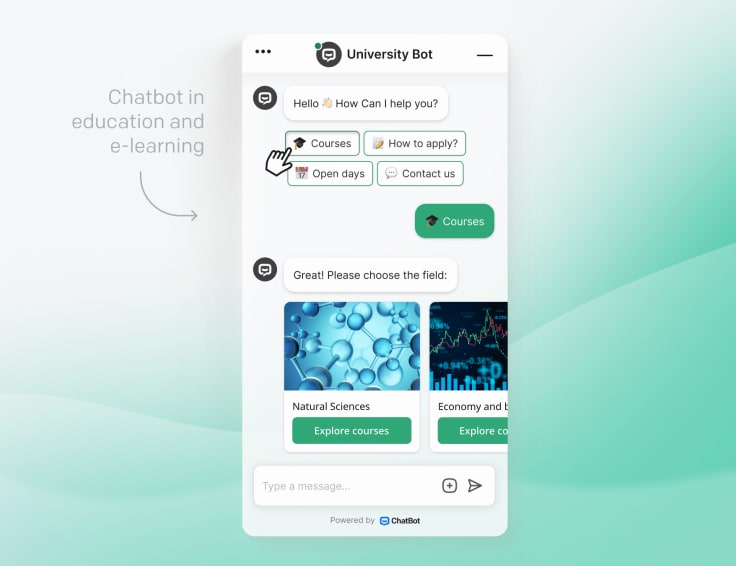
For example, Arizona State University implemented a chatbot to help students navigate admissions, enrollment, and financial aid. By answering frequently asked questions instantly, the chatbot helps students get the necessary information without long wait times.
Chatbots in finance and banking
Banks and financial institutions have embraced AI-driven chatbots to improve customer service, assist with transactions, and provide financial guidance. These bots help customers check their account balances, monitor spending habits, and even receive real-time fraud alerts.
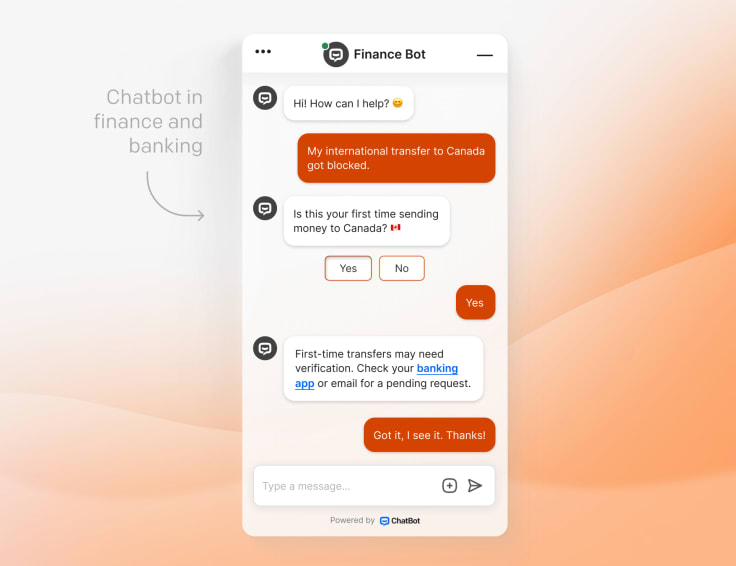
Take Bank of America, for instance. Their virtual assistant, Erica, helps customers manage their accounts, track spending, and receive personalized financial insights. With Erica, customers can make payments, lock debit cards, and get real-time updates on their financial health.
Another financial institution, Capital One, launched Eno, an AI-powered chatbot that helps customers track expenses and get notifications about unusual account activity. Eno proactively alerts users if it detects a suspicious transaction, adding an extra layer of security.
Similarly, PayPal uses a chatbot to assist users with transactions, refunds, and payment disputes. By providing instant support, PayPal ensures that its customers receive fast resolutions without contacting a human agent.
Chatbots in entertainment and media
The entertainment industry has also adopted chatbots to engage audiences and provide content recommendations. Streaming services, movie studios, and gaming companies use AI to enhance user experiences and boost content discovery.
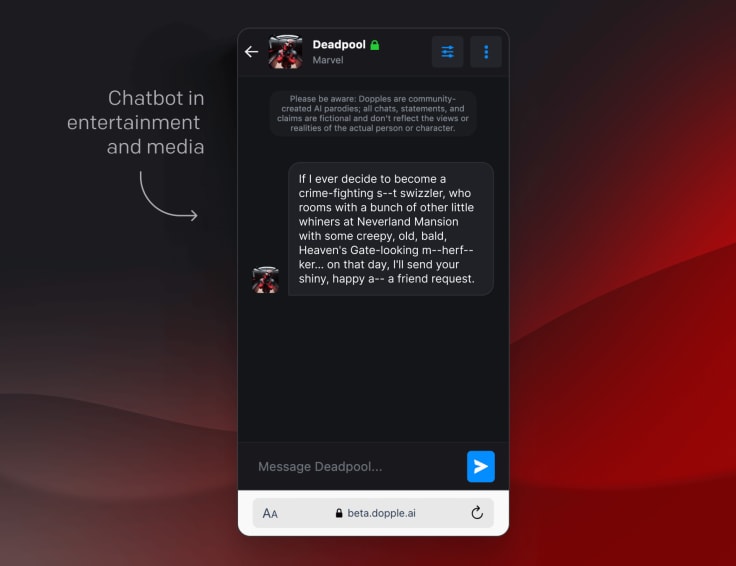
In the film industry, 20th Century Studios created a chatbot to promote their movie Deadpool 2. The bot engaged with fans through witty, character-driven conversations, generating excitement and increasing box office sales.
Travel and hospitality
The travel and hospitality industry has embraced AI chatbots to improve customer service, streamline booking processes, and enhance guest experiences. Hotels, airlines, and travel agencies use these tools to provide instant support and personalized travel recommendations.
For example, Hilton Hotels collaborated with IBM to develop a robot named Connie to assist guests with hotel services, local recommendations, and room bookings. The AI assistant provides real-time answers to guests’ questions, making their stay more enjoyable and hassle-free.
Meanwhile, Delta Airlines offers a concierge chatbot that helps passengers check flight status, change bookings, and get real-time updates on delays. By automating these tasks, the airline reduces call center wait times and improves customer satisfaction.
Put your AI chatbot to work
In 2026, AI chatbots are no longer a "nice-to-have." They're infrastructure. From answering customer queries around the clock to qualifying leads, recovering abandoned carts, and surfacing buying signals your sales teams would otherwise miss, AI agents are reshaping what customer service can do for a business.
The companies getting the most out of chatbot technology aren't just automating routine tasks. They're using AI to turn every support conversation into a potential sale, every complaint into an opportunity, and every FAQ into a data point that makes their business smarter over time. That's what happens when you build AI agents on real customer data and connect them to a unified workspace where live chat, helpdesk, and automation all work together.
ChatBot is built for exactly this. An AI agent trained on your business data, deployed in minutes, connected to everything your team already uses. No code. No months-long implementation. Just customer service that finally earns its keep.